A smile can look attractive in a still photograph yet appear artificial when you speak, laugh, or relax your lips. By examining your face at rest and in motion, testing proposed changes before treatment, and comparing conservative options, you can judge whether a planned smile will look natural and function comfortably.
Key takeaways
- Assess lip movement, facial midline, tooth display, and bite—not tooth shape alone.
- Request digital previews and temporary mock-ups before irreversible cosmetic treatment.
- Treat decay, gum disease, worn teeth, and bite problems before cosmetic changes.
- Judge results by speech, lip support, symmetry, and natural variation—not identical teeth.
What does facial-driven smile design measure beyond the teeth?
It measures how teeth behave within your face, not how closely they match a fixed tooth template.
facial driven smile design for natural smile in mumbai begins with the face at rest and in animation: facial and dental midlines, symmetry, nose–chin relationship, lip position and mobility, smile arc, incisal edge position, and tooth display at rest, during speech, and while smiling.
- Examine the relaxed face for facial symmetry, lip posture, visible upper and lower teeth, tooth proportions, gingival exposure, and the smile corridor—the dark space between the teeth and cheeks.
- Record animated expressions during speech and spontaneous smiling. This can reveal an incisal cant, uneven lip movement, excessive gum display, or too little tooth display that a posed photograph hides.
- Compare the teeth with the lips, nose, chin, gingival margins, and facial midline before deciding whether tooth length, width, or edge position needs changing.
There is no universal ideal ratio. The golden proportion is not a reliable rule for every face because facial form, lip position, gum architecture, tooth display, and personal preference change the result. facial driven dentistry in mumbai should use proportions as a guide, not a formula.
Age matters too: younger adults tend to show more upper incisors, while visible upper incisor height commonly reduces with age. Assessing relaxed and animated expressions helps prevent a youthful template from looking artificial on an older face before any cosmetic recommendation.
What happens during a facially driven smile consultation in Mumbai?
A facial driven dentistry in Mumbai consultation starts with your face at rest and in motion, not a fixed tooth template. The clinician records calibrated full-face photographs, retracted intraoral photographs, and a full-face smile-and-speech video before proposing changes.
| Record | What it shows | Why it matters |
|---|---|---|
| Calibrated full-face photographs | Facial and dental midlines, symmetry, lips, smile arc | Relates tooth position to the face |
| Retracted intraoral photographs | Tooth proportions, gingival contours, existing restorations | Documents the starting dental condition |
| Smile-and-speech video | Lip movement, tooth display, gingival exposure | Reveals differences between posed and natural expressions |
| Intraoral scans | Tooth surfaces, spaces, bite, and digital models | Supports digital planning and mock-ups |
| Radiographs, when indicated | Roots, bone, decay, and hidden pathology | Prevents cosmetic planning from overlooking disease |
| Articulator or occlusal records | Incisal guidance, contacts, and restorative space | Tests whether the proposed change can function |
The clinician compares posed photographs with spontaneous smiling and speech to identify an incisal cant, asymmetrical lip movement, excessive gingival display, or insufficient tooth display.
Natural smile design in Mumbai then progresses through a diagnostic wax-up, digital planning, and a physical mock-up or provisional restorations, followed by your feedback and checks for speech, cleaning, contacts, and comfort.
Tooth colour must be recorded under controlled conditions. Dehydration, lighting, camera settings, translucency, surface texture, lips, and skin can all change its appearance. After adjustments and functional approval, the plan moves to the final restoration.
How can you test a smile design before choosing irreversible treatment?
A reversible trial is the best way to test a smile design before enamel preparation. It lets you judge the proposed change on your face, not only on a screen.
| Option | What you can assess | What it cannot prove |
|---|---|---|
| Digital overlay | Approximate tooth length, width, gingival contour, smile arc, and facial integration | Lip movement, speech, occlusal contacts, ceramic thickness, bonding conditions, or everyday lighting |
| Diagnostic wax-up and transferred mock-up | Tooth length, lip support, smile arc, comfort, facial integration, and phonetics | The final ceramic’s exact translucency, texture, fit, or emergence profile |
| Provisional restoration | Appearance during speech and smiling, incisal guidance, excursive contacts, cleaning, and day-to-day comfort | The final material’s precise colour, surface texture, translucency, and long-term durability |
A mock-up is more informative than a digital image because you can speak, smile naturally, and watch how the teeth relate to your lips from conversational distance. Test “F” and “V” sounds, then check sibilants such as “S”; excessive length or altered tooth position can change airflow and pronunciation.
Ask the clinician to identify exactly what the trial is testing:
- Tooth length, width, midline, and smile arc
- Lip support and tooth display at rest and during speech
- Bite contacts, comfort, and cleaning access
- Colour under controlled photography and ordinary indoor lighting
Natural smile design in Mumbai and personalised smile design in Mumbai should use the preview to refine a plan, not promise an identical final result. A provisional phase provides the strongest practical test before irreversible treatment.
Which treatment creates the change, and when should cosmetic work wait?
Orthodontics, bonding, gum treatment, restorations, whitening, or implants create the physical change; facial-driven dentistry decides which change fits your face, lips, bite, and goals. It is a planning approach, not a material or a guarantee. The least invasive option is not automatically the right one.
| Option | Creates the change | When it applies |
|---|---|---|
| Orthodontics | Moves teeth and corrects position | Crowding, spacing, midline or occlusal-plane problems |
| Composite bonding | Adds shape or length | Minor reshaping without removing enamel |
| Veneers | Changes selected front surfaces | Front-tooth colour, shape, or proportion concerns |
| Crowns | Covers and protects weakened teeth | Substantial structural loss or damage |
| Whitening | Changes colour only | Teeth are healthy but too dark |
| Gum reshaping | Corrects uneven gingival contours | Excess gum display or altered passive eruption |
| Implants | Replaces missing teeth | A tooth is absent and cannot be restored |
Cosmetic work should wait or change direction if you have active gum inflammation, decay, significant tooth wear, recession, missing teeth, a tilted occlusal plane, bite instability, jaw-joint symptoms, parafunction, airway concerns, or speech problems. Treating these first prevents veneers or crowns from disguising a problem that later damages the result.
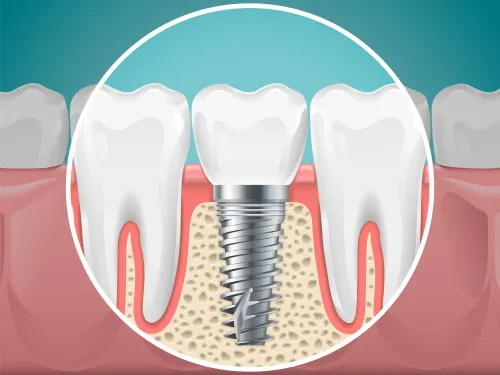
Smile design applications in Mumbai may combine treatments. In facial driven dentistry in Mumbai, plan the visible implant tooth position and gum contours before placement; implant position is difficult to correct with the crown alone. Provisionals can shape peri-implant soft tissue before the definitive crown.
How do you recognise a natural-looking result and choose a provider?
A natural-looking result is not simply straight, bright, and identical across every tooth; it should fit your face, lips, age, speech, and bite.
| Feature | Natural-looking sign | Warning sign |
|---|---|---|
| Controlled translucency and colour | Slight variation in shade and light transmission | Flat, opaque teeth with one uniform colour |
| Surface texture and line angles | Fine texture and believable light-reflecting contours | Smooth, bulky surfaces that look artificial |
| Embrasures and incisal edges | Varied spaces and individualised edges | Identical teeth with matching edges |
| Contact areas and emergence profiles | Contacts suit the tooth shape; restorations rise cleanly from the gums | Closed-looking contacts or bulky gum margins |
| Proportions and tooth display | Age-appropriate proportions and suitable upper-tooth visibility at rest | Excessive tooth display or a rigid, oversized template |
Ask the provider these questions before accepting the plan:
- What diagnosis supports it, and how much enamel will be removed?
- Were orthodontic, additive composite, periodontal, whitening, veneer, crown, or implant alternatives considered?
- Can I see a reversible mock-up or provisional, and test speech, including F, V, and sibilant sounds?
- How will you check bite, incisal guidance, excursive contacts, parafunction, restorative space, and cleaning access?
- How often will maintenance be needed, and what happens if a restoration chips, debonds, or needs replacement?
Personalised smile design in Mumbai and smile design applications in Mumbai should include these records and functional checks, not only a screen preview. A consultation at IRIDIA DENTAL can be useful when you want diagnosis, previews, bite assessment, and follow-up responsibilities addressed in one coordinated plan.
Related service
Smile Design & Facial-Driven Dentistry Smile Design & Facial-Driven Dentistry At Iridia Dental, our cosmetic dentistry services combine advanced technology with artistic precision to create smiles that are not only beautiful... View service → |
Frequently asked questions
What does facial-driven smile design measure beyond the teeth?
It evaluates facial midline, lip movement, tooth display at rest and while smiling, gingival show, bite, facial proportions, and how teeth support the lips.
What happens during a facially driven smile consultation in Mumbai?
The consultation may include photographs, video, a dental examination, bite assessment, facial measurements, digital scans, and discussion of your goals and treatment limits.
How can you test a smile design before choosing irreversible treatment?
Ask about a digital preview, diagnostic wax-up, or reversible mock-up placed over the teeth. Check speech, comfort, lip support, tooth length, and appearance from different angles.
When should cosmetic work wait?
Delay cosmetic treatment until active decay, gum disease, infection, unstable bite, severe wear, or untreated sleep and airway concerns have been assessed and managed.
How do you recognise a natural-looking result and choose a provider?
Look for tooth variation, balanced midline and proportions, appropriate gum display, comfortable function, and before-and-after cases showing similar facial features and treatment goals.
Keywords