The right bleaching method depends first on why your teeth look darker, not on whether a clinic advertises laser, LED or premium whitening. By the end, you will know how shade, stains, restorations, tooth health and smile-design goals change the safest and most predictable treatment choice.
Key takeaways
- Clean surface stains before choosing a bleaching treatment.
- Yellow teeth often respond better than grey or brown intrinsic discolouration.
- Treat uneven colour and restorations separately from natural teeth.
- Choose bleaching, trays or smile design based on your shade and goals.
Start with the cause of the discolouration, not the whitening technology
A dentist first identifies why the tooth looks dark before choosing a bleaching method. Surface, or extrinsic, staining from tea, coffee, tobacco or plaque often responds well after professional cleaning. Intrinsic discolouration lies within enamel or dentine and may respond unevenly or only partly.
If you are asking, “which dental bleaching option suits my tooth shade in Mumbai?”, the answer starts with the cause, not a “laser” or “LED” label.
The examination should check:
- Active decay, because peroxide can irritate an untreated cavity.
- Cracks or worn enamel, which can increase sensitivity.
- Leaking fillings or other tooth-coloured restorations, because bleaching will not change their shade.
- Enamel defects, fluorosis, hypoplasia or banded marks that may need a different treatment.
- Inflamed or bleeding gums, which require treatment before bleaching.
- A single grey or brown tooth after trauma or root-canal treatment, which may need vitality testing and an X-ray.
Yellowing from naturally darker dentine often suits dentist-supervised bleaching, including custom trays worn over repeated sessions. It produces a gradual change and is not automatically inferior to in-office treatment. Thin or translucent enamel can limit the final shade, so bleaching will not always create an opaque, bright-white result.
Whitening toothpaste mainly removes surface stains; it cannot reliably change intrinsic tooth colour. A dentist should also record the shade of existing restorations before treatment, because whitening natural teeth around them can create a visible mismatch.
Match the bleaching approach to yellow, grey, brown and translucent teeth
Yellow teeth usually respond most predictably to peroxide bleaching, especially when the colour comes from age-related dentine showing through enamel or surface stains from tea, coffee, tobacco or paan.
| Shade | Suitable approach | Reasonable result |
|---|---|---|
| Yellow or yellow-brown | Dentist-prescribed custom trays for gradual control; in-office bleaching when speed matters | A noticeable, even brightening over days to weeks. Deep dentine colour can limit the final shade. |
| Grey or blue-grey | Examination first; supervised bleaching for mild cases, with internal bleaching considered for one dark tooth after root-canal treatment | Slower, less predictable lightening. A grey tooth may remain darker than its neighbours. |
| Brown | Professional cleaning for surface deposits, followed by trays or in-office bleaching if the tooth is healthy | Surface brown staining can improve substantially; intrinsic brown bands or defects often remain partly visible. |
| Translucent or thin-edged | Conservative tray bleaching at a controlled pace | The teeth may look brighter, but bleaching will not make transparent edges opaque. Greater brightness can make halo effects or uneven translucency more noticeable. |
For dental bleaching for yellow teeth in Mumbai, custom trays are not a weaker version of in-office treatment; they trade speed for control and usually require consistent wear over repeated sessions.
Grey, brown and translucent shades deserve a clinical examination before choosing a stronger product. Bleaching cannot change porcelain, crowns, veneers or composite fillings, and light or laser activation does not guarantee a whiter final shade. Expect temporary sensitivity if peroxide reaches exposed dentine or irritated gums.
Plan uneven colour, dark teeth and restorations as separate problems
If only some teeth differ in colour, do not bleach the entire smile automatically. General bleaching can make bands, white spots or mottled areas stand out more. Choose among bleaching options for uneven tooth colour only after identifying whether the difference comes from enamel, dentine, trauma or a restoration.
- White or brown bands from fluorosis or enamel hypoplasia need diagnosis before treatment. Enamel microabrasion, resin infiltration or composite masking can produce a more even result than whole-mouth bleaching.
- A grey or brown tooth after trauma or root-canal treatment is a separate problem. Request vitality testing and a radiograph; treat infection or structural damage first, then consider internal bleaching if the tooth is non-vital and suitable.
- Tetracycline staining can affect several teeth in bands and respond unevenly. A dentist may combine controlled bleaching with composite or veneers when bleaching alone cannot create a uniform shade.
- Porcelain veneers, crowns, bridges and composite fillings do not lighten. Bleaching the natural teeth beside them can create a mismatch, so plan definitive restorations after bleaching and shade stabilisation.
| Pattern | Appropriate plan | Why |
|---|---|---|
| White spots or bands | Microabrasion, resin infiltration or targeted bleaching | Whole-mouth bleaching can increase contrast |
| One dark tooth | Vitality test, radiograph and cause-specific treatment | It may signal pulpal damage, not surface staining |
| Existing restoration | Bleach natural teeth first, then replace or shade-match the restoration | Restoration colour remains unchanged |
Ask the dentist to record the starting shade and show the expected limit before treatment. A natural tooth may lighten while a defect remains visible.
Compare in-office bleaching, custom trays and over-the-counter products
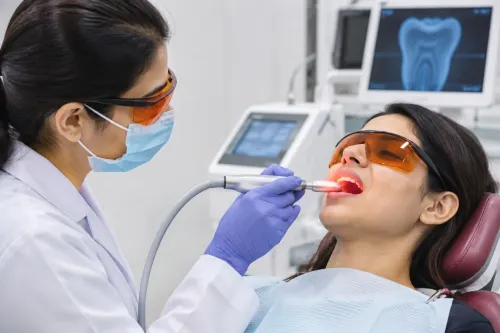
A one-appointment change favours in-office bleaching; a controlled, gradual result favours dentist-prescribed custom trays. Neither automatically produces a whiter final shade than the other.
| Option | Speed | Control and sensitivity | Maintenance and suitability |
|---|---|---|---|
| In-office bleaching | Visible change in one or a few appointments | High peroxide concentration, close gum protection and supervision; stronger products can increase sensitivity | Useful when time is limited, but repeat treatment still depends on staining and shade relapse |
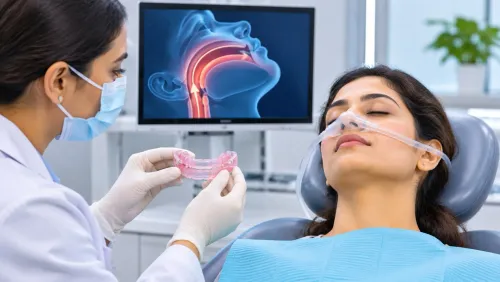
| Custom trays | Gradual change over days to weeks | Lower-concentration peroxide, precise fit and adjustable wear time; easier to reduce exposure if sensitivity develops | Best for controlled shade changes, ongoing maintenance and patients who can follow instructions |
| Over-the-counter products | Usually slower and less predictable | Variable peroxide strength, tray fit and contact time; whitening may miss recessed or uneven areas and irritate gums | Convenient for mild surface staining, but poor for bands, isolated dark teeth or restorations |
Custom trays offer the best balance when you want control over how much each tooth lightens. Over-the-counter strips or trays suit simple, fairly even staining, not complex smile design.
Sensitivity and temporary gum irritation are the main trade-offs. Stronger products, longer contact, dehydrated teeth, exposed dentine and cracks raise the risk, so reduce wear time rather than pushing through pain.
Tea, coffee, tobacco, paan and plaque can darken teeth again; maintenance should use professional review, oral hygiene and limited repeat bleaching, not frequent unsupervised peroxide. Light or laser activation does not guarantee a better final shade.
Use a smile-design consultation to decide whether bleaching is enough
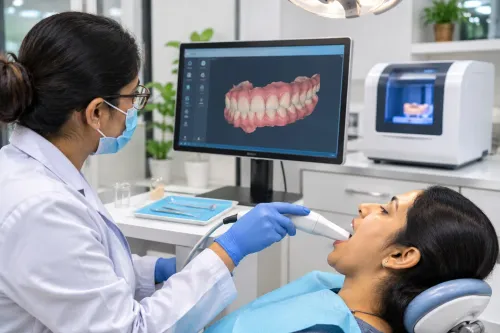
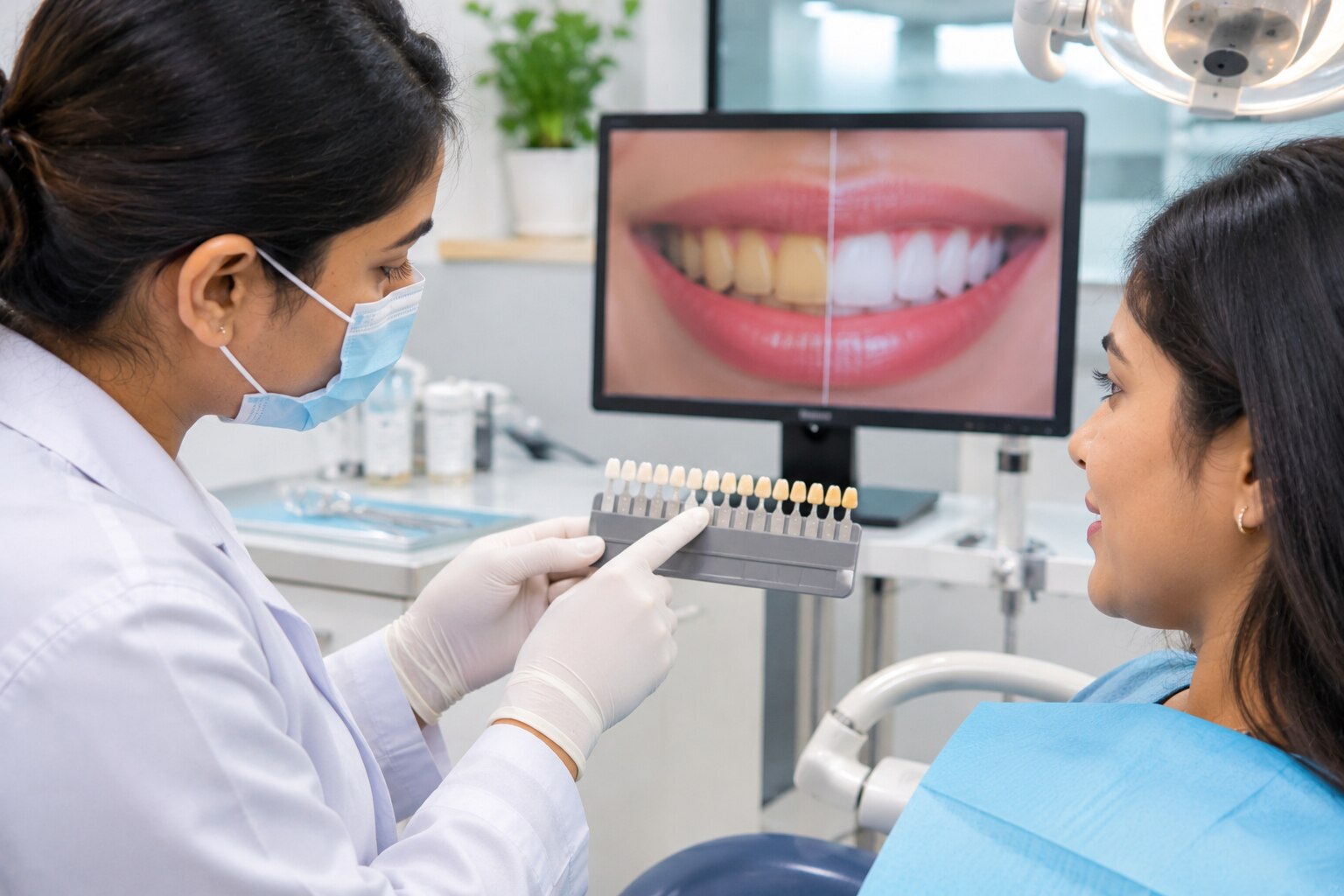
A smile design bleaching consultation in Mumbai should decide whether bleaching will improve the whole visible smile, not just produce a lighter shade. The dentist should examine caries, cracks, leaking fillings, enamel defects, gum inflammation and existing crowns or veneers before recording your starting shade.
1. Check the cause and health of each tooth. Treat decay, gum disease, infection or a structural crack first; bleaching an unhealthy tooth can worsen sensitivity or hide the real problem.
2. Assess the smile as a composition. Review lip display, tooth proportions, translucency, facial features, age-appropriate brightness and teeth that will show after orthodontics, contouring or restorations.
3. Set a realistic colour target. Yellow dentine often responds better than grey, brown, fluorosis or tetracycline staining, while thin or translucent enamel can limit brightness. Bleaching can also make bands, mottling and white spots look more obvious.
4. Separate isolated darkness from general staining. A single dark tooth after trauma or root-canal treatment needs vitality testing and radiographs; if it is non-vital and suitable, internal bleaching may follow infection control and structural repair.
IRIDIA DENTAL can use restorative planning alongside shade assessment when bleaching would leave fillings, crowns or uneven enamel visibly mismatched. Veneers, composite masking, resin infiltration or enamel microabrasion may need to come first for localised defects, while a restoration may need replacement after bleaching.
Finish by agreeing on maintenance: plaque control, sensible stain exposure and limited supervised touch-ups rather than frequent strong peroxide use.
Frequently asked questions
Which dental bleaching option suits my tooth shade in Mumbai?
Start by identifying the cause and colour pattern. Professional cleaning suits surface staining; dentist-supervised bleaching suits many yellow teeth, while grey, brown or translucent teeth need an assessment for uneven results.
What is the best dental bleaching for yellow teeth in Mumbai?
Yellow teeth often respond to in-office bleaching or custom trays after an examination. The right choice depends on stain depth, sensitivity, existing fillings and how quickly you want results.
What are the options for uneven tooth colour?
A dentist should assess each tooth separately. Bleaching can improve natural teeth unevenly, while restorations, intrinsic stains or isolated dark teeth may need restorative or other cosmetic treatment.
When is a smile design bleaching consultation in Mumbai worthwhile?
Book a consultation when you have restorations, grey or brown teeth, translucent edges, uneven shades or a specific smile goal. It helps determine whether bleaching alone can deliver a balanced result.
Keywords