An uneven smile can come from tooth position, gum levels, worn edges, a slanted bite, missing teeth, jaw structure, or the way your lips move. By the end, you will know which findings a dentist should check, which treatments match each cause, and how to compare plans before agreeing to irreversible work.
Key takeaways
- An uneven smile can result from teeth, gums, bite, jaw position, or unequal lip movement.
- Request facial, dental, gingival, and bite assessments before choosing cosmetic treatment.
- Match treatment to the cause: orthodontics, bonding, veneers, gum treatment, implants, or jaw care.
- Compare dentists by diagnosis, digital planning, conservative treatment, and documented follow-up.
What does an uneven smile mean clinically?
An uneven smile is a finding, not a diagnosis. Rotated or differently sized teeth, unequal incisal edges, missing teeth, uneven gingival margins, a shifted dental midline, or a slanted bite can each create it. Jaw deviation, facial asymmetry, and unequal lip movement can also change the smile, alone or in combination.
A clinical assessment should separate these causes:
1. Dental asymmetry affects tooth position, shape, length, gum level, or contact. It may respond to orthodontics, bonding, gum treatment, or replacement of a missing tooth.
2. Skeletal asymmetry involves the jaw or facial bones and cannot be corrected by reshaping teeth alone. Muscular imbalance or a facial-nerve disorder can alter lip movement despite relatively even teeth.
3. A recent change is a safety issue. Sudden facial drooping, difficulty closing one eye, speech changes, arm weakness, or numbness requires urgent medical assessment for conditions such as stroke or facial-nerve disease, not cosmetic treatment.
Persistent jaw pain, restricted opening, or locking needs evaluation before elective bite-changing work. Clicking alone is not automatically a reason for treatment.
A consultation for uneven smile treatment in Mumbai should identify whether the unevenness comes from teeth, gums, bite, jaw, facial movement, or several sources. The facial and dental midlines do not need to match perfectly; forcing them together can damage function or remove healthy enamel unnecessarily.
How should a dentist evaluate an uneven smile?
A proper assessment starts with your history, not a posed front photograph. A smile design dentist for uneven smile in Mumbai should ask about medical conditions, medicines, previous dental treatment, pain, jaw symptoms, clenching, grinding, and your specific concern.
The examination should include:
- Front and profile photographs, with the head positioned consistently
- Video of smiling, speaking, and laughing naturally
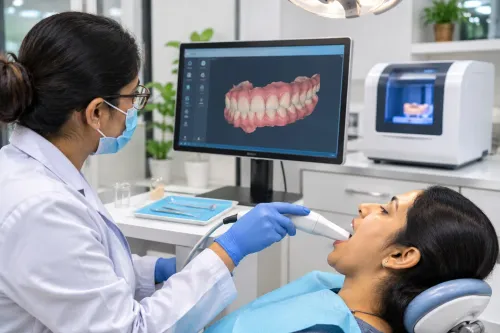
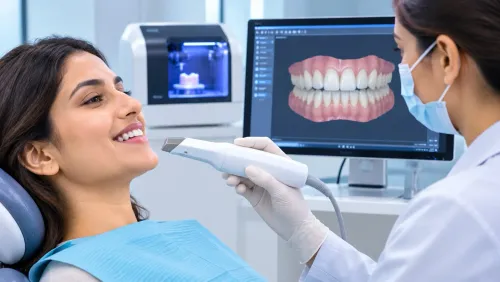
- An intraoral scan showing tooth position, shape, spacing, and bite
- Facial midline and dental midline
- Tooth display at rest and incisal edge position during smiling
- Smile arc, buccal corridors, lip mobility, and gingival display
- Tooth proportions, gum health, tooth contacts, and bite records
- Jaw opening, closing, side-to-side movement, and signs of clenching or grinding
The facial and dental midlines do not need to match perfectly. A small difference can look balanced when tooth inclination, lip position, and facial asymmetry are considered. Forcing the dental midline onto the facial midline can create an unstable bite, worsen tooth angulation, or require needless enamel removal.
The dentist should then identify the source of the unevenness. A rotated tooth, worn edge, or unequal tooth width points to a tooth problem; bleeding gums or different gum levels point to a periodontal problem. A slanted bite or abnormal contacts suggest an occlusal issue, while jaw deviation indicates a joint or skeletal cause.
Unequal lip movement or facial weakness requires assessment beyond cosmetic dentistry.
Which treatment matches the cause of the asymmetry?
| Finding | Suitable option | Key limitation or check |
|---|---|---|
| Rotated teeth, spacing, tooth-position problems, shifted dental midline | Orthodontics or clear aligners | Plan the bite and retention |
| Very small edge discrepancy | Enamel reshaping | Avoid removing excessive enamel |
| Minor shape, length, or spacing difference | Composite bonding | Can stain, chip, and wear |
| Selected structural or aesthetic change | Veneers | Check enamel, decay, gum disease, bruxism, and bite stability |
| Uneven gingival margins or excessive gum display | Gum contouring or periodontal treatment | Assess periodontal support before removing gum or bone |
| Substantially damaged tooth | Crown | Restore the tooth before refining symmetry |
| Missing tooth | Bridge or implant | Replace the space without assuming the whole smile is corrected |
A smile correction dentist in Mumbai should match treatment to the finding, not apply veneers to every visible difference. Bonding preserves more tooth structure, while veneers require maintenance and may become irreversible after enamel removal.
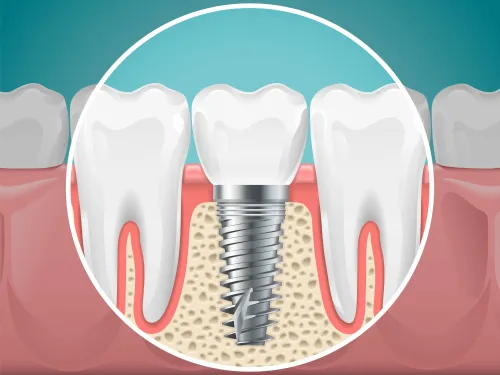
An implant replaces a missing tooth; it does not correct rotated teeth, a shifted midline, a slanted bite, or facial asymmetry. Plan implant placement with tooth position, bone volume, gum tissue, bite, hygiene, systemic health, and adjacent teeth. Placing it first can compromise final symmetry.
Ask how facial-driven dentistry in Mumbai measures the facial and dental midlines, lip support, tooth display, gingival display, occlusion, and facial movement. Refer a skeletal discrepancy to an orthodontist, oral and maxillofacial surgeon, or another appropriate specialist rather than trying to reshape teeth around a jaw problem.
What happens before and after smile correction?
1. Diagnosis comes first: record tooth contacts, gum contours, speech, chewing, lip movement, bruxism, sensitivity, and the forces on each tooth.
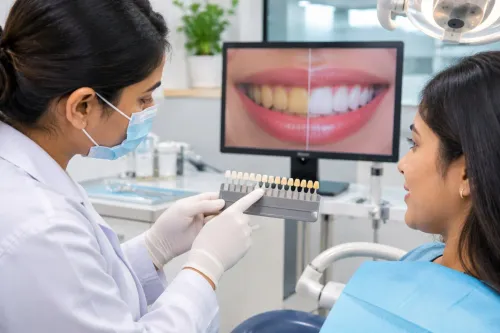
2. Digital planning comes second. Intraoral scans, photographs, and software previews help compare tooth proportions and explain the proposed changes, but they cannot guarantee the result. Head position, lens distortion, lighting, lip movement, and assumed gum contours can alter the image.
3. A mock-up or trial smile comes third. Test the design in the mouth with a mock-up or equivalent clinical assessment, then check appearance, speech, chewing, tooth contacts, and comfort.
4. Patient approval comes fourth. Before treatment, discuss enamel reduction, longevity, repairability, occlusion, sensitivity, bruxism, and what happens if a restoration chips.
5. Place provisional restorations when tooth preparation or a bite change requires testing. They reveal problems with length, speech, chewing, or gum response before final treatment.
6. Complete the final treatment, then attend adjustment visits. Increasing tooth length or changing the bite without controlling clenching and grinding forces can cause discomfort, chipping, sensitivity, or restoration failure.
Orthodontics preserves enamel but takes longer and needs retention. Bonding is usually repairable, yet it can stain, chip, or wear. Veneers require maintenance and eventual replacement after enamel has been removed. Choose only after confirming that decay, gum disease, inadequate enamel, and bite instability are addressed; a digital preview is communication, not proof.
How do you compare smile design dentists in Mumbai?
Location is not a quality standard: compare the consultation, diagnosis, and treatment sequence. Ask a smile correction dentist in Mumbai:
- What is the diagnosis in plain language, how many teeth are involved, and is the asymmetry caused by tooth position, gums, bite, jaw, or facial movement?
- Which steps are reversible, and which are irreversible? State the exact amount of enamel removal in millimetres.
- What material will be used, which laboratory will make it, and who will perform each procedure?
- What longevity do you expect, what maintenance schedule applies, and what is the repair policy if a restoration chips?
- How will treatment affect the bite, speech, chewing, sensitivity, and clenching or grinding?
- What retention will orthodontics require, and could orthodontics reduce the number of veneers?
- What is the treating dentist’s registration, and who will place, adjust, or cement each restoration?
- How will you test the design: photographs, intraoral scans, a mock-up, or provisional restorations?
| Question | Useful answer | Warning sign |
|---|---|---|
| Diagnosis | Names the actual asymmetry and its cause | Fixed cosmetic package for every patient |
| Testing | Shows the proposed smile before irreversible work | Digital preview presented as a guarantee |
| Aftercare | Explains longevity, repairs, retention, and reviews | No plan if results chip or disappoint |
For smile design in Lower Parel, evaluate IRIDIA DENTAL using these questions: does its examination and sequence address your source of asymmetry, rather than sell a fixed package?
Related service
Smile Design & Facial-Driven Dentistry Smile Design & Facial-Driven Dentistry At Iridia Dental, our cosmetic dentistry services combine advanced technology with artistic precision to create smiles that are not only beautiful... View service → |
Frequently asked questions
What does an uneven smile mean clinically?
It describes visible asymmetry caused by factors such as rotated or differently sized teeth, unequal incisal edges, missing teeth, uneven gingival margins, a shifted dental midline, a slanted bite, jaw deviation, facial asymmetry, or unequal lip movement.
How should a dentist evaluate an uneven smile?
A dentist should assess your teeth, gums, bite, dental midline, facial proportions, jaw position, and lip movement. Photographs, digital scans, radiographs, and a facially driven treatment plan may be appropriate.
Which treatment matches the cause of smile asymmetry?
Orthodontics can address tooth position and certain bite problems; bonding or veneers can alter tooth shape and edges; gum treatment can correct uneven margins; implants can replace missing teeth; and jaw or airway evaluation may be needed when skeletal or functional factors contribute.
What happens before and after smile correction?
Before treatment, expect examination, records, diagnosis, treatment alternatives, and a discussion of maintenance. After correction, follow cleaning instructions, attend reviews, protect restorations from excessive force, and wear retainers when prescribed.
How do you compare smile design dentists in Mumbai?
Compare how clearly each dentist identifies the cause, explains alternatives, uses facially driven planning, limits unnecessary tooth reduction, documents expected results, and provides follow-up. Consider convenient access, including clinics offering smile design in Lower Parel.
Keywords