Loud snoring, mouth breathing and morning headaches do not all point to the same problem, and a dental appliance is not the right first step for every patient. By matching your symptoms to the likely cause, urgency and appropriate test, you can decide whether to seek emergency care, a sleep physician, an ENT specialist or an airway dentist—and know what to ask before treatment.
Key takeaways
- Seek urgent care for blue lips, chest pain, fainting or severe breathlessness.
- Ask a sleep specialist which test confirms obstructive sleep apnoea.
- CPAP suits confirmed obstructive sleep apnoea; dental appliances suit selected adults.
- Choose a custom device after dental, jaw-joint and bite assessment.
Do your breathing symptoms need urgent care or a routine consultation?
Prolonged witnessed breathing pauses, severe choking during sleep, blue lips, severe breathlessness, chest pain, fainting or new neurological symptoms need prompt medical assessment. Do not delay urgent care to arrange an elective airway-dentist appointment.
Stop driving if daytime sleepiness makes you struggle to stay awake; untreated sleepiness creates a road-safety risk even without an OSA diagnosis.
| Symptom pattern | Appropriate next step | Why it matters |
|---|---|---|
| Witnessed prolonged pauses, blue lips, chest pain or fainting | Urgent medical assessment | These signs can indicate dangerous breathing or cardiovascular problems |
| Loud snoring with gasping, pauses, morning headaches or unrefreshing sleep | Routine sleep physician assessment and sleep study | Snoring plus these symptoms raises concern for obstructive sleep apnoea |
| Persistent nasal blockage, mouth breathing or enlarged tonsils | Routine GP or ENT assessment, alongside dental review | Nasal, tonsillar and tongue-base problems need examination beyond the teeth |
| Jaw clenching, tooth wear or morning jaw soreness without breathing pauses | Routine dental assessment | Sleep-related bruxism does not prove sleep apnoea |
| Sleepiness, poor concentration or dry mouth without emergency signs | Routine sleep-breathing consultation | These symptoms need evaluation rather than assumption |
When comparing airway sleep dentistry options for breathing symptoms in Mumbai, check whether the clinician requires a sleep study, examines teeth and temporomandibular joints, coordinates with a sleep physician or ENT specialist, and schedules objective follow-up. A dental airway assessment cannot diagnose asthma, central sleep apnoea or every cause of nasal obstruction.
A dental appliance should not be prescribed from snoring alone.
Which breathing disorder could explain your symptoms?
Loud snoring alone points to primary snoring, not automatically obstructive sleep apnoea. Witnessed pauses followed by choking or gasping, morning headaches, dry mouth, nocturia, poor concentration or daytime sleepiness make obstructive sleep apnoea more concerning.
| Possible disorder | Clues that support it | What to do next |
|---|---|---|
| Obstructive sleep apnoea | Loud habitual snoring, pauses, gasping, fragmented sleep, morning headache or sleepiness | Arrange a sleep study and medical assessment |
| Central sleep apnoea | Repeated pauses without the typical snoring-and-choking pattern, especially with heart failure, stroke, opioid use or neurological disease | Seek sleep-physician assessment; do not start a dental appliance based on symptoms alone |
| Primary snoring | Snoring without witnessed pauses, gasping, oxygen concerns or daytime impairment | Discuss causes and confirm that apnoea is not present |
| Nasal blockage | Persistent congestion, mouth breathing, reduced nasal airflow, allergy symptoms or a deviated septum | Request an ENT assessment; nasal treatment does not reliably cure established apnoea |
| Asthma | Wheeze, cough, chest tightness or breathlessness, often worse with triggers or at night | Arrange respiratory or medical review; severe breathlessness needs prompt care |
| Sleep-related bruxism | Tooth grinding, jaw-muscle fatigue, worn teeth or morning jaw pain, with no clear breathing pauses | Obtain dental and sleep assessment; grinding can coexist with apnoea |
A dental airway assessment cannot rule out enlarged tonsils, tongue-base obstruction, severe obesity or cardiopulmonary disease. Before choosing airway dentistry for sleep breathing problems in Mumbai, ask whether the clinician requires sleep testing, checks teeth and jaw joints, coordinates referrals and verifies treatment with objective follow-up.
Which tests and specialists determine the right next step?
A proper work-up starts with medical sleep-apnoea testing, not a dental appliance. A sleep physician reviews your symptoms, medicines, health conditions and sleep pattern, then chooses a home sleep apnoea test or overnight polysomnography.
Polysomnography is the stronger choice when central apnoea, significant heart or lung disease, insomnia, unusual movements or an unclear result is suspected.
Specialists divide the investigation according to the suspected cause:
| Specialist | Examination or test | Refer when |
|---|---|---|
| Sleep physician | Home sleep apnoea test or polysomnography; oxygen and breathing analysis | Witnessed pauses, choking, marked daytime sleepiness, morning headaches or suspected central apnoea |
| ENT specialist | Nasal examination, flexible endoscopy and assessment of tonsils, adenoids, septum and turbinates | Persistent nasal blockage, mouth breathing, chronic sinus symptoms, enlarged tonsils or a structural obstruction |
| Dentist | Teeth, bite, jaw joints and muscles; appliance fitting after diagnosis | Confirmed suitable OSA, stable dental health and a need to assess mandibular advancement |
If the study confirms OSA, the dentist should coordinate with the sleep physician, record baseline bite and temporomandibular-joint findings, and arrange objective follow-up testing after appliance adjustment. Less snoring alone does not prove that apnoeas or oxygen drops have stopped.
Choose sleep breathing dental treatment in Mumbai only when the provider requests the sleep-study report, uses a custom titratable device when indicated and refers rather than treats unexplained nasal, medical or central breathing problems. Children need paediatric sleep and airway assessment, particularly with enlarged tonsils or adenoids.
When is CPAP, nasal treatment, surgery or orthodontic care more suitable than a dental appliance?
The sleep study and anatomical findings should drive the choice: a dental appliance is not a substitute for treatment that matches the disorder, severity or age.
| Option | More suitable when | Essential checks |
|---|---|---|
| PAP therapy (CPAP or APAP) | Moderate-to-severe obstructive sleep apnoea, marked oxygen desaturation, substantial daytime sleepiness or cardiovascular disease | Sleep physician prescription, mask tolerance and objective follow-up |
| Nasal treatment or ENT care | Allergic rhinitis, turbinate enlargement, deviated septum or persistent nasal obstruction | ENT examination; nasal treatment may improve breathing or PAP use but does not reliably cure OSA alone |
| Mandibular advancement device | Adults with mild-to-moderate OSA, or adults unable to tolerate PAP, with adequate teeth and healthy jaw joints | Custom titration, dental and temporomandibular-joint assessment, then repeat sleep testing |
| Adenotonsillectomy | A child with enlarged tonsils or adenoids and confirmed OSA | Paediatric sleep and airway assessment; surgery commonly comes before dental treatment |
| Selected orthodontic care | A child or adolescent with a narrow maxilla, crossbite or a defined craniofacial pattern | Orthodontic assessment; rapid maxillary expansion is not a universal adult OSA treatment |
Central sleep apnoea requires sleep-physician management, not a mandibular device. For airway sleep dentistry options for breathing symptoms in Mumbai, ask whether the clinician reviews the sleep-study report, coordinates with ENT and schedules objective follow-up. Responsible sleep breathing dental treatment in Mumbai also monitors tooth movement, altered bite, jaw discomfort, dry mouth and excess salivation.
Is a custom mandibular advancement device safe and suitable for you?
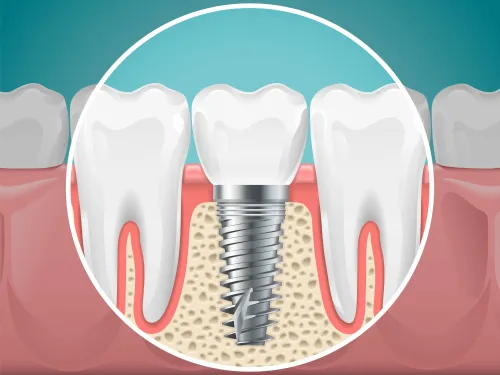
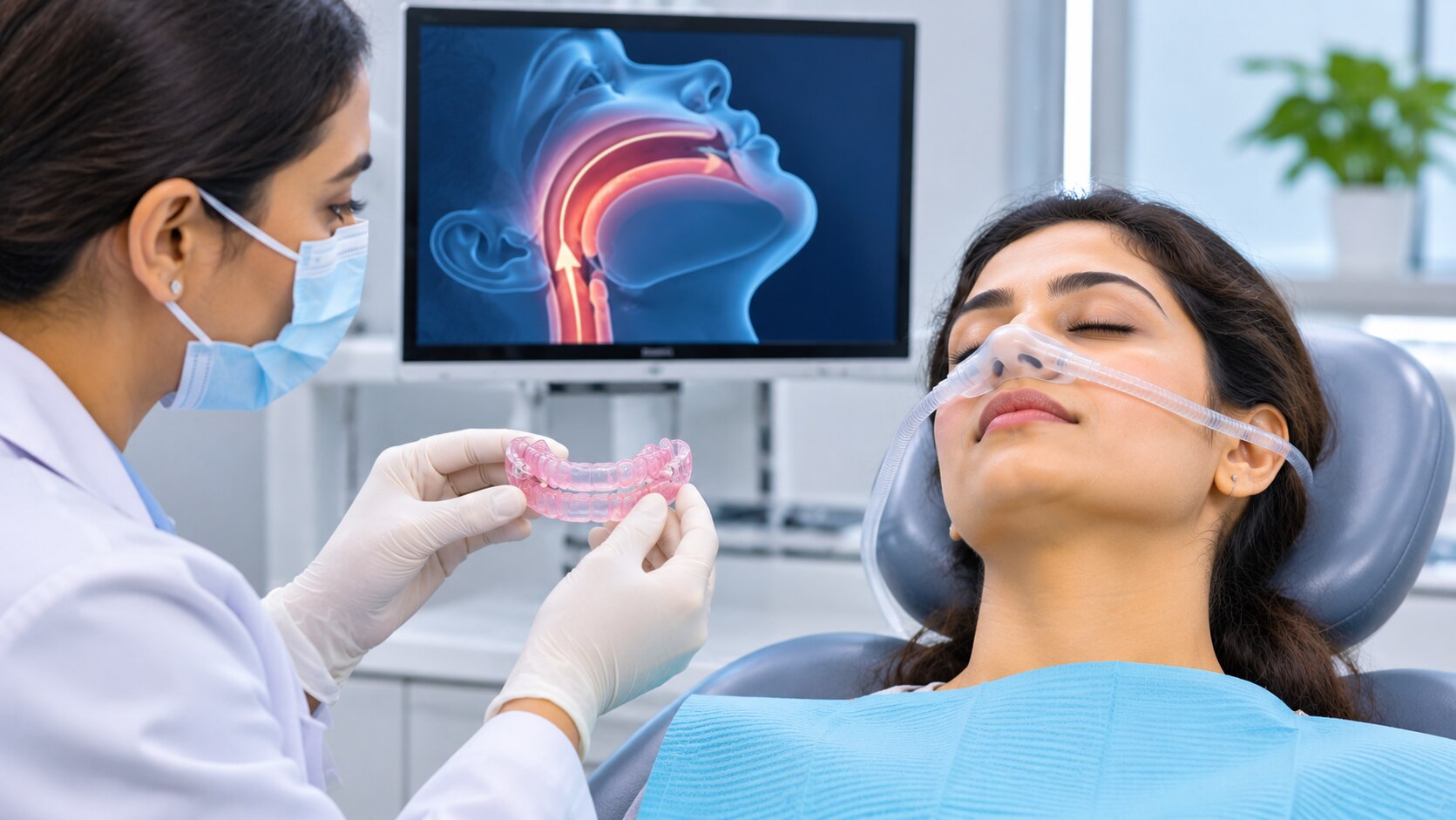
A custom mandibular advancement device holds your lower jaw slightly forward during sleep, creating more space behind the tongue and reducing upper-airway collapse. It is a prescription, adjustable appliance made for your teeth—not the same as an over-the-counter anti-snoring mouthpiece.
It suits some adults with confirmed obstructive sleep apnoea, especially when CPAP is intolerable or an oral appliance is preferred.
| Option | What it does | When it applies |
|---|---|---|
| Custom mandibular device | Advances the lower jaw and is titrated gradually | Selected adults with obstructive sleep apnoea and suitable teeth and jaw joints |
| CPAP or APAP | Splints the airway open with pressurised air | Moderate-to-severe disease, marked oxygen drops, cardiovascular disease or substantial daytime sleepiness |
| Referral before appliance | Identifies another cause or dental risk | Suspected central apnoea, major nasal obstruction, unstable teeth, active gum disease or jaw-joint problems |
Delay treatment until assessment if you have loose teeth, untreated gum disease, significant tooth pain, limited jaw movement or active temporomandibular-joint symptoms. A dental appliance is not a substitute for urgent care after prolonged breathing pauses, severe choking, chest pain, fainting, blue lips or dangerous sleepiness while driving.
Ask an airway dentist for adults in Mumbai whether they:
- Require polysomnography or a suitable home sleep-apnoea test before treatment
- Use a custom, titratable device and check your bite, teeth and jaw joints
- Coordinate with a sleep physician or ENT clinician when findings need medical treatment
- Arrange repeat sleep testing and dental reviews after titration
IRIDIA DENTAL is worth assessing on these practical criteria, not simply on the label airway dentistry for sleep breathing problems in Mumbai.
Related service
Airway & Sleep Dentistry Our airway-focused approach identifies structural issues that interfere with restful sleep or proper breathing. View service → |
Frequently asked questions
When do breathing symptoms need urgent care rather than a routine consultation?
Seek prompt medical assessment for prolonged witnessed breathing pauses, severe choking during sleep, blue lips, severe breathlessness, chest pain, fainting or new neurological symptoms. Do not delay urgent care for an elective airway-dentist appointment.
Which breathing disorder could explain snoring, choking or witnessed pauses?
Obstructive sleep apnoea is one possible cause. A clinician must assess your symptoms and confirm the diagnosis with appropriate sleep testing rather than relying on snoring alone.
Which tests and specialists determine the right next step?
A sleep physician or other qualified medical clinician assesses your symptoms and chooses sleep testing. An airway dentist can assess your teeth, bite, jaw joints and suitability for a mandibular advancement device.
When is CPAP more suitable than a dental appliance?
CPAP is usually considered when testing confirms obstructive sleep apnoea and positive airway pressure is the appropriate treatment. A dental appliance is not a substitute for medical assessment.
Is a custom mandibular advancement device safe and suitable for every adult?
No. Suitability depends on the diagnosis, severity, nasal breathing, teeth, gums, bite and jaw joints. A qualified dentist should examine you and coordinate care with your sleep clinician.
Keywords