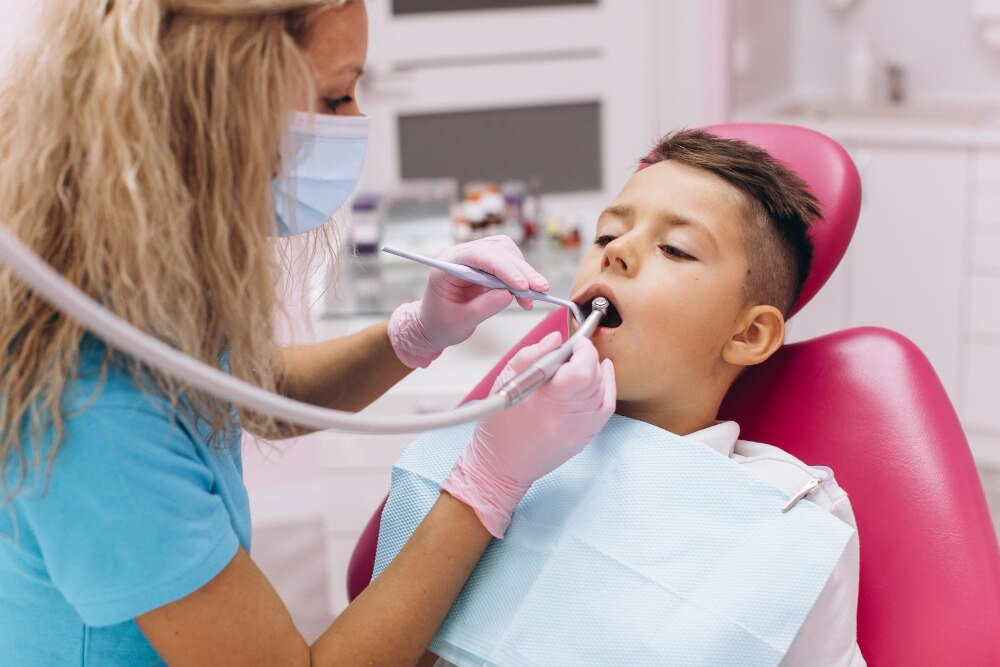
A child who cries, freezes, gags or refuses the dental chair needs more than a promise that treatment will be painless. You will learn when a paediatric specialist is worth prioritising, how to prepare for the first visit, and how to judge behaviour guidance, sedation and treatment plans before you consent.
Key takeaways
- Choose a specialist when fear prevents examination or necessary treatment.
- Expect the first visit to focus on trust, history, and gradual cooperation.
- Ask exactly why sedation or general anaesthesia is proposed.
- Compare treatment benefits, risks, alternatives, and follow-up before deciding.
When Dental Anxiety Justifies a Paediatric Specialist
A paediatric specialist is justified when fear prevents a safe examination, causes avoidance, or makes necessary treatment impossible—not merely because a child cries. A general family dentist may suit a mildly worried child who accepts explanation and basic care.
Delaying care is reasonable only when there is no pain, swelling, trauma or suspected infection and the dentist recommends a short acclimatisation plan.
Look for patterns that persist or worsen:
- Refusing to enter the clinic, freezing, hiding or becoming aggressive
- Crying, gagging or panic at the dental smell, drill sound, mask or separation from a parent
- Disturbed sleep, food avoidance or repeated complaints after a previous painful visit
- Returning with pain because appointments were cancelled or treatment could not begin
A paediatric dentist for anxious children in Mumbai has training in child development, behaviour guidance, local anaesthesia, trauma, primary teeth and developing permanent teeth. That matters when the child is very young, has extensive decay, a painful history or additional healthcare needs.
A child dentist in Mumbai should measure anxiety rather than judge it from volume: tools such as the Facial Image Scale, Venham Picture Test and Children’s Fear Survey Schedule–Dental Subscale can reveal distress in a quiet child.
Choose a clinician who records medical and anxiety history, offers staged care, explains pain control and sedation risks, and gives prevention advice. The strongest outcome is not instant cooperation; it is leaving the child more able to manage the next visit.
What a Well-Planned First Visit Should Look Like
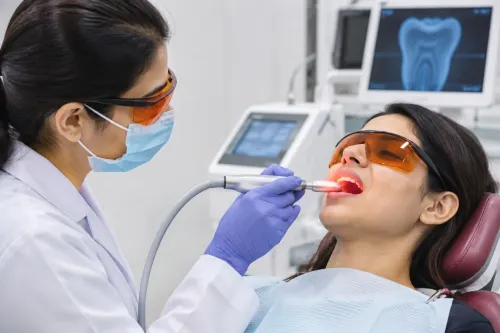
A good first appointment may end without treatment. That is a success when the child has no pain or swelling: the dentist can assess caries, infection, oral habits, anxiety and cooperation, then plan the next step without creating a frightening first memory.
1. Before the visit, tell the clinic about previous pain, gagging, sensory triggers, medical conditions and medicines. Ask whether a parent stays in the room and whether the appointment is an examination or treatment. Do not delay an urgent visit for acclimatisation if the child has facial swelling, fever, trauma or uncontrolled pain.
2. During the appointment, the dentist should explain each step in child-friendly words, demonstrate instruments before using them, and agree on a stop signal. Tell-show-do, distraction and praise make the process predictable. Say, “The dentist will check your teeth,” not “It will not hurt”; avoid threats, shame and promises of a completely painless visit.
A quiet child can still be distressed, so the team should observe behaviour and ask simple questions.
3. Afterward, ask what was found, which teeth need attention, how pain will be controlled and whether treatment should be staged. Record what helped and what triggered distress. A short follow-up visit can reinforce progress.
A provider offering paediatric dental care in mumbai should explain this behaviour plan instead of promising instant cooperation. That practical preparation is more valuable than advanced equipment alone.
How Dentists Build Cooperation Without Rushing Treatment
The most effective approach is to make each step predictable, brief and successful—not to force a frightened child through treatment. Tell-show-do lets the dentist explain an instrument, demonstrate it safely, then use it; praise rewards specific cooperation, such as opening the mouth or keeping still.
| Technique | How it helps | Limitation |
|---|---|---|
| Tell-show-do | Replaces unfamiliar sights and sounds with a rehearsed sequence | It cannot remove fear once pain or infection is driving distress |
| Positive reinforcement and distraction | Rewards cooperation while music, video or conversation shifts attention | Rewards must not become a bargain for tolerating unsafe behaviour |
| Modelling and desensitisation | Lets the child watch a calm sibling or practise in small steps across visits | Progress can take several appointments |
| Appropriate voice control | A clear, calm instruction interrupts unsafe movement | It must never mean shouting, shaming or threatening |
Treatment adaptations include a short acclimatisation visit, a morning appointment, frequent breaks, child-sized instruments, topical anaesthetic before local anaesthetic, and treatment in small stages. A rubber dam or other isolation method can improve comfort and safety when the procedure requires moisture control.
These methods do not guarantee cooperation. A child with a dental abscess, severe pain or spreading swelling needs prompt care, not repeated acclimatisation visits. Staged treatment also takes more time and may cost more.
Ask a dentist for nervous children in Mumbai to document anxiety, pain control, the behaviour plan and the point at which sedation or referral becomes safer than continuing non-drug techniques.
Sedation and General Anaesthesia: What You Are Actually Agreeing To
Nitrous oxide is not general anaesthesia: it reduces fear while your child remains awake, responsive and breathing independently. It often improves cooperation, but local anaesthetic is still needed for drilling, pulp treatment or extraction.
| Option | Purpose and supervision | Risks, recovery and suitability |
|---|---|---|
| Nitrous oxide and oxygen | Mild anxiolysis, delivered through a nasal mask by a trained dental team with clinical observation. | Nasal congestion, mask panic or inability to breathe through the nose can make it ineffective. Recovery is usually rapid after oxygen; it suits cooperative children with mild to moderate anxiety. |
| Oral or intravenous sedation | Reduces anxiety and movement; oral medicine is less predictable, while intravenous sedation allows closer dose adjustment. A trained provider must assess the child beforehand, monitor continuously and have airway-rescue equipment and skills. | Sedation can become deeper than intended, causing breathing or oxygen problems. Arrange fasting exactly as instructed and expect monitored recovery; suitability depends on health, age, procedure and cooperation. |
| General anaesthesia | Produces unconsciousness, with an anaesthesia team managing the airway and monitoring breathing, circulation and depth throughout treatment. | Fasting, airway complications, nausea and prolonged grogginess are part of the agreement. Use it for extensive treatment, unsafe non-cooperation, special healthcare needs or urgent care that cannot otherwise be completed—not ordinary fear alone. |
Before agreeing, ask who administers and monitors the medicine, what emergency equipment is available, how long observation lasts, and what happens if the child becomes distressed. A paediatric dentist for anxious children in Mumbai should explain these choices plainly when planning children dental treatment in Mumbai.
How to Decide Whether the Proposed Care Is Worth It
The care is worth paying for when the plan solves a present risk without creating avoidable fear or overtreatment. For primary teeth, ask whether decay is painful, infected, restorable, likely to remain long enough to matter, and whether treatment prevents space loss or damage to developing permanent teeth.
A small lesion in a tooth near natural shedding may justify monitoring and fluoride advice, not an extensive procedure.
Compare providers using these questions:
- Is the diagnosis supported by an examination and necessary radiographs?
- Does the team record medical history, previous dental experiences, anxiety triggers and cooperation limits?
- Will it control pain, explain sedation risks clearly and provide a prevention plan?
- Does the proposed treatment leave your child more able to manage the next visit?
- Can the dentist explain alternatives, including monitoring, restoration or extraction, and the consequence of each?
| Option | What it means | When it applies |
|---|---|---|
| Delay | Anxiety is accommodated while disease remains watched | No pain, swelling or infection, with a scheduled review |
| Family dentist | Suitable for straightforward care and a cooperative child | Limited treatment and no specialist behaviour needs |
| Paediatric dentist | Adds child-development and behaviour expertise | Fear, young age, prior painful care or extensive treatment |
A child dentist in Mumbai offering paediatric dental care in Mumbai should explain its techniques rather than promise instant cooperation. When reviewing care at IRIDIA DENTAL, use the same standards: realistic staging, documented risks, pain control and prevention—not equipment or “laser” branding alone.
Related services
Paediatric Dentistry Creating healthy habits and early positive experiences is essential in pediatric care. View service → |
Specialised Treatments Our team handles everything from bite imbalances and TMJ disorders to full-mouth makeovers and anxiety-free dentistry—all with precision and... View service → |
Frequently asked questions
When does dental anxiety justify seeing a paediatric specialist?
Choose a paediatric specialist when fear prevents a safe examination, causes avoidance, or makes necessary treatment impossible. A mildly worried child who accepts explanation and basic care may suit a general family dentist.
What should happen during an anxious child’s first dental visit?
A well-planned first visit should allow time for the dentist to take a medical and dental history, explain the environment, assess anxiety, and build trust before treatment is attempted.
How do paediatric dentists build cooperation without rushing treatment?
They use age-appropriate explanations, demonstrations, gradual exposure, clear choices, praise, breaks, and agreed signals. They adjust the pace instead of forcing a procedure the child cannot manage safely.
What are you agreeing to when a dentist proposes sedation or general anaesthesia?
Ask which method is proposed, why it is needed, who will provide and monitor it, what fasting and escort instructions apply, which risks matter, and what recovery and follow-up involve.
How can parents decide whether proposed dental care is worth it?
Compare the condition being treated, the consequences of delay, expected benefits, alternatives, risks, total appointments, recovery demands, and follow-up. Request a written treatment plan and an explanation of each option.
Related service
Preventive Treatments Comprehensive Oral Examination A complete oral health check is the cornerstone of effective dental care. View service → |
Keywords