Persistent pain, swelling, bleeding, pus, exposed implant threads, gum recession or a loose implant after placement is not simply “slow healing.” You will learn how to identify the likely cause, what tests should come first, where laser treatment may help, and when grafting, bite correction, antibiotics, surgery or implant removal is the safer path.
Key takeaways
- Persistent pain, pus, fever or a loose implant needs assessment before laser treatment.
- Request an examination with implant X-rays before consenting to laser care.
- A diode laser cannot replace cleaning, grafting, bite correction or implant removal.
- Compare diagnosis, laser type, treatment plan and follow-up before choosing care.
When implant healing has become a problem rather than normal inflammation
Some soreness, swelling and light bleeding are expected during the first few days after implant placement. Persistent or worsening pain, swelling, recurrent bleeding, pus or other drainage, fever, exposed threads, gum recession, a changed bite, or a loose crown needs an implant assessment, not repeated laser sessions.
| Condition | What it suggests | Appropriate response |
|---|---|---|
| Peri-implant mucositis | Inflamed soft tissue without confirmed supporting bone loss | Improve plaque control and arrange professional cleaning |
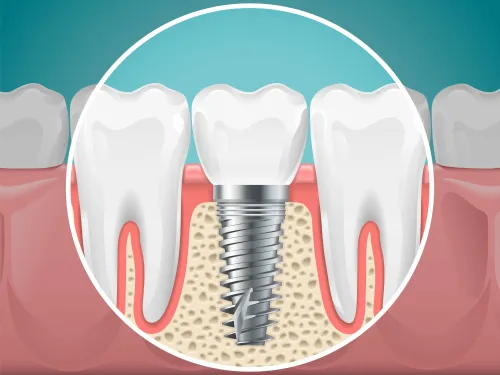
| Peri-implantitis | Inflammation with progressive bone loss, often with bleeding, pus or deeper pockets | Examination, radiographs and treatment matched to the defect |
| Infection or inadequate bone volume | Drainage, fever, exposed threads, recession or failure of bone integration | Clinical assessment; antimicrobial care, grafting or surgery may be required |
| Occlusal overload | Pain on biting, a changed bite or recurrent loosening | Check and adjust the bite |
| True implant mobility | The implant itself moves, rather than only the crown | Urgent assessment; failed integration may require removal |
A laser does not distinguish these causes. Diode treatment might assist selected soft-tissue care, but it cannot stabilise a mobile implant, replace missing bone or correct overload. If you have pus, fever, worsening pain or mobility, seek examination and periapical or panoramic radiographs; CBCT may be needed to assess three-dimensional bone loss.
Choose implant healing treatment in Mumbai by the diagnosis, not by the word “laser.”
The examination that should come before laser treatment
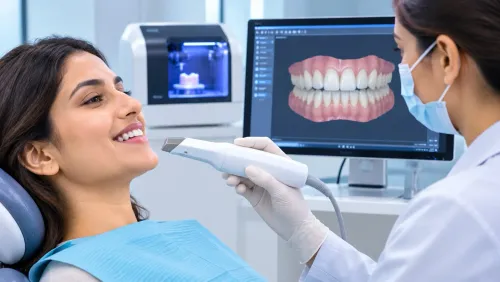
A clinician should inspect the gum and crown, probe around the implant, test implant and crown mobility, and check the bite before selecting a laser. Periapical or panoramic radiographs help assess bone levels and complications; request CBCT when two-dimensional images cannot show three-dimensional bone anatomy, a defect, implant position, or a grafting decision clearly.
The assessment should also review placement and loading dates, primary implant stability, plaque control, smoking or tobacco use, diabetes and glycaemic control, periodontal history, medical conditions, and medicines that affect healing or bleeding. Persistent swelling, pus, worsening pain, fever, bleeding, or a changed bite needs investigation rather than repeated sessions.
| Loading plan | Usual healing logic | What must be verified |
|---|---|---|
| Conventional loading | Often allows roughly 2–6 months for osseointegration | Bone, implant stability, positioning, occlusion, and maintenance |
| Immediate loading | Places function soon after insertion | Defined primary stability, suitable bone, implant design, controlled occlusion, and follow-up |
| Early loading | Loads before the conventional interval | Stability and healing conditions must be documented before function begins |
A laser does not make immediate loading safe by itself. The phrase laser treatment for implant healing in Mumbai should therefore describe a diagnosis-led plan, not a device chosen from symptoms alone. Ask what finding the proposed treatment targets and how healing will be measured through probing, mobility, symptoms, and imaging.
What a diode laser can do around a healing implant
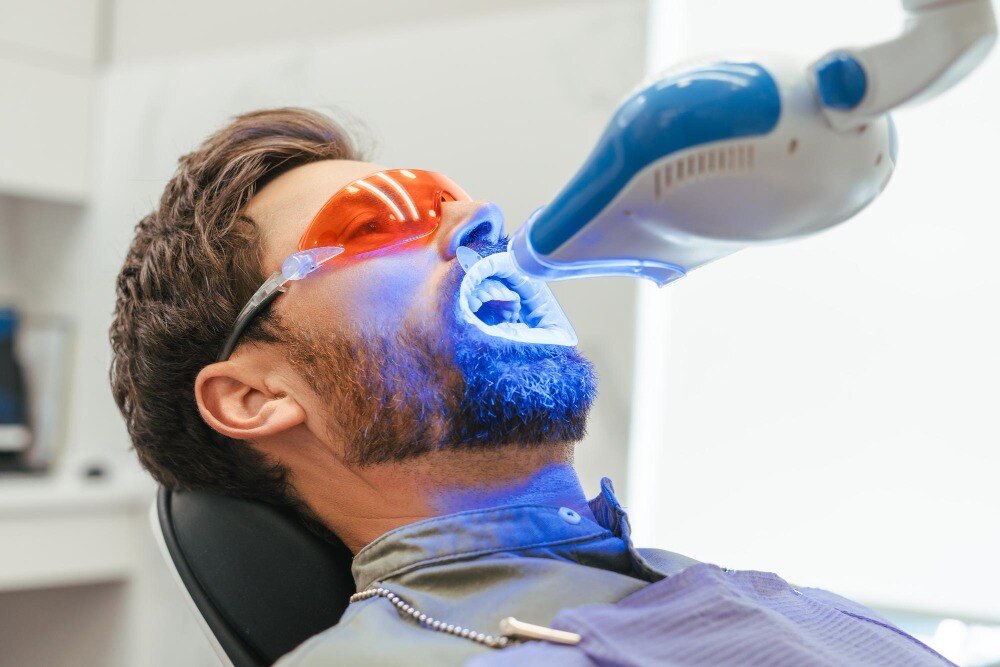
A laser appointment around a healing implant can mean two different treatments. Photobiomodulation uses low-level red or near-infrared light; studies report selected biological or radiographic benefits, but protocols differ in wavelength, energy density, power, timing and number of sessions. It does not guarantee faster or more predictable osseointegration.
| Option | Main purpose | What it cannot replace |
|---|---|---|
| Photobiomodulation | Influence inflammation and healing with low-level light | Stability testing, bone grafting or infection control |
| Diode laser | Selected soft-tissue procedures, inflamed gum management, cleaning access and soft-tissue decontamination | Mechanical biofilm disruption or treatment of a mobile implant |
| Surgical or decontamination laser | Tissue removal or implant-surface decontamination, depending on the system | A universal solution for peri-implantitis or missing bone |
Laser dentistry in Mumbai and laser gum treatment in Mumbai should therefore be described by the diagnosis, laser system and wavelength—not by “laser” alone. Around titanium, incorrect power, pulse duration, exposure time, angulation or cooling can overheat bone or alter implant threads.
Before consenting, ask:
- Which wavelength and setting are planned, and is this photobiomodulation or surgical treatment?
- What endpoint will be measured: pain, probing, bleeding, mobility or radiographic bone change?
- Why does this protocol fit the implant site, and what mechanical, surgical or medical alternative addresses the same problem?
A laser cannot stabilise a mobile implant, replace missing bone, correct uncontrolled diabetes or remove a poorly positioned implant. Stop repeated sessions if the cause of poor healing remains unidentified.
When the treatment needs cleaning, grafting, bite correction or removal
A laser session cannot correct the diagnosis if the implant is infected, overloaded, unstable or surrounded by insufficient bone. Treatment should match the finding:
- Peri-implant mucositis needs plaque and biofilm control, professional mechanical instrumentation and risk-factor management. A diode laser may support selected soft-tissue care, but it does not replace mechanical disruption or daily cleaning.
- Peri-implantitis can require mechanical debridement, antimicrobial treatment, resective surgery or regenerative surgery. The defect shape, bone loss and access determine the choice; repeated laser sessions alone can leave the infection and bone loss untreated.
- Inadequate bone volume may require staged augmentation, guided bone regeneration, membrane stabilisation, graft material, sinus augmentation or a revised loading plan. Regenerative dentistry in Lower Parel should distinguish rebuilding a bone defect from treating an infected implant.
- Guided bone regeneration needs space maintenance, membrane stability, suitable blood supply, primary soft-tissue closure and infection control. Laser exposure alone does not create bone or stabilise a membrane.
- Occlusal overload requires bite evaluation and adjustment. Excessive contact can keep stressing an implant even after the surrounding gum looks less inflamed.
- A truly mobile implant or a poorly positioned implant may need removal and replacement rather than more sessions.
Antibiotics need a clinical indication, not a routine laser package. Persistent infection, uncontrolled diabetes or another medical problem requires medical evaluation alongside dental treatment. Ask which diagnosis is being treated, what non-laser alternative applies, and how healing will be measured with probing, mobility checks and radiographs.
How to compare laser implant care in Mumbai before you consent
Consent to laser treatment for implant healing in Mumbai only after the provider links a named diagnosis to a measurable treatment goal. Ask for:
- The written diagnosis and the exact laser system, wavelength, power, pulse settings and cooling method.
- Whether the plan is photobiomodulation or surgical/decontamination use.
- The intended endpoint, evidence for that indication, number and timing of visits, risks and alternatives.
- Follow-up measurements: symptoms, probing depths, bleeding, mobility, radiographs and CBCT when three-dimensional assessment is needed.
“Painless,” “regenerative” and “faster healing” are descriptions, not outcomes. A credible plan states what will change, by when and how failure will be handled.
| Option | What it addresses | Main limitation or risk |
|---|---|---|
| Laser adjunct | Selected soft-tissue, inflammation or healing support | Does not replace biofilm removal, stabilise mobility or create missing bone |
| Mechanical debridement and antimicrobial therapy | Plaque, calculus and infection control | May not resolve deep defects or advanced peri-implantitis |
| Periodontal or peri-implant surgery | Access, resection or regeneration | Surgical morbidity, healing demands and recurrence risk |
| Bone grafting or guided bone regeneration | Inadequate bone volume or contained defects | Requires space, membrane stability, blood supply and infection control |
| Implant removal | True mobility, severe infection or poor positioning | Requires healing and a replacement plan |
For regenerative dentistry in Lower Parel, IRIDIA DENTAL is relevant only if its assessment connects implant, gum, restorative, occlusal and medical risks. The useful question is whether the proposed wavelength and procedure answer the documented cause of poor healing.
Related service
Laser & Regenerative Dentistry Laser & Regenerative Dentistry Our four-wavelength Diode Laser and biologic therapies allow for minimally invasive, accelerated healing with less discomfort. View service → |
Frequently asked questions
When does implant healing require assessment rather than routine observation?
Seek an implant assessment for persistent or worsening pain, swelling, recurrent bleeding, pus or drainage, fever, exposed threads, gum recession, a changed bite or a loose crown.
What examination should come before laser treatment for a healing implant?
The clinician should examine the implant, gum and bite, review symptoms and healing, and use appropriate dental imaging to identify infection, bone loss, poor positioning or other causes.
What can a diode laser do around a healing implant?
A diode laser can support soft-tissue treatment around an implant after the cause of delayed healing has been identified. It does not replace removal of infected deposits, grafting, bite correction or implant removal when those treatments are needed.
When is laser treatment not enough for implant healing problems?
Laser treatment is not enough when the problem involves infected deposits, inadequate bone or gum tissue, excessive bite force, implant instability or an implant that must be removed.
Keywords