Obstructive sleep apnea can be managed through different approaches, and two commonly discussed options are positive airway pressure therapy and a custom oral appliance. They work differently, have different suitability criteria and require different forms of follow-up.
Sleep apnea dental treatment should not be selected simply because an appliance appears smaller or more convenient. The decision should follow a confirmed diagnosis and a discussion with the appropriate sleep and dental professionals.
How CPAP Works
Continuous positive airway pressure therapy delivers air through a mask to help keep the airway open during sleep. The pressure setting and equipment are selected according to the patient’s clinical needs.
CPAP can be highly effective when used consistently. Common practical challenges may include mask discomfort, air leakage, dryness, noise concerns or difficulty adapting to the equipment. Many of these concerns can be improved through mask refitting, humidification or adjustment by the treating sleep team.
A patient who struggles initially should not abandon therapy without discussing the problem with the prescribing clinician.
How an Oral Appliance Works
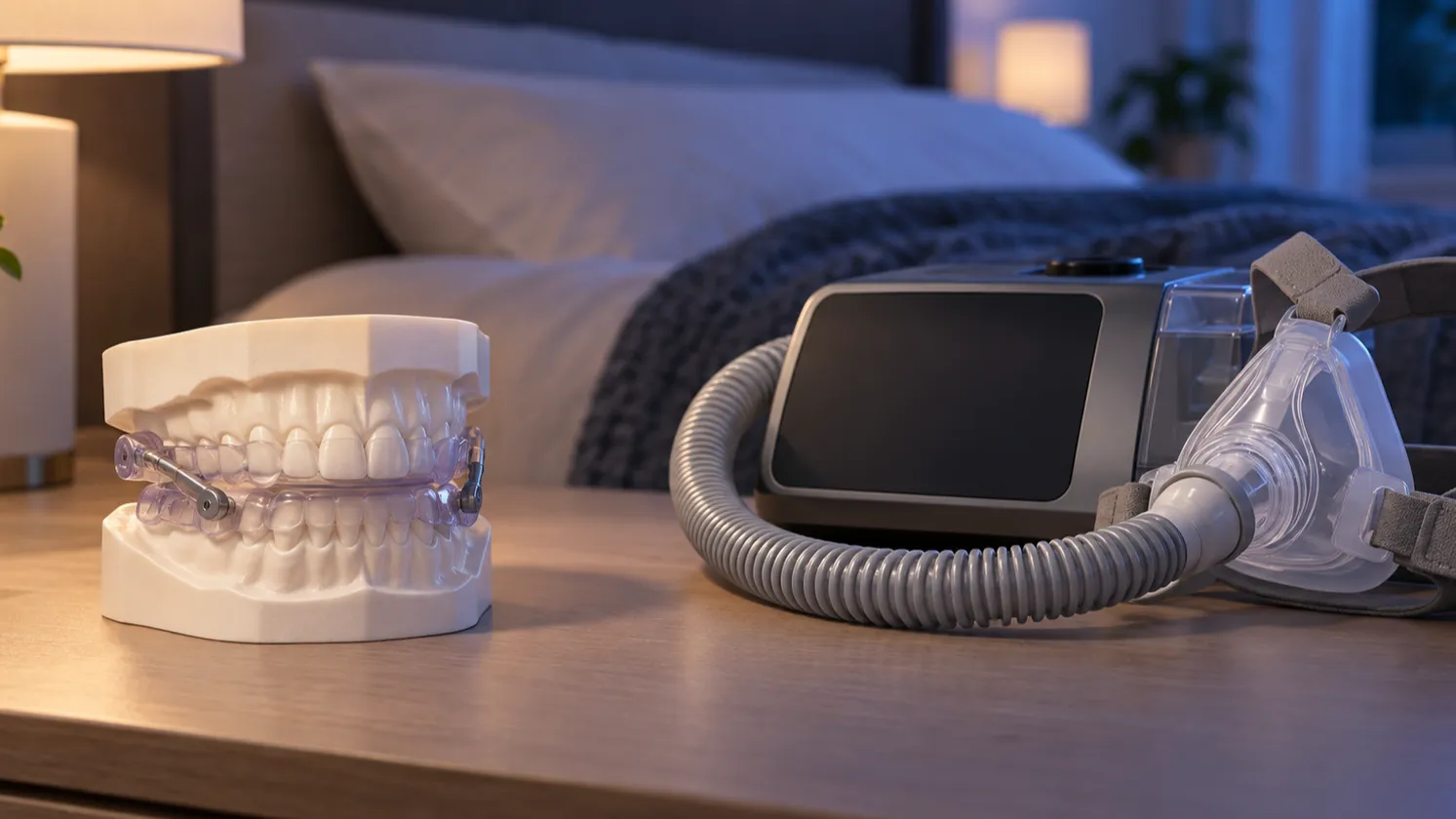
A sleep apnea oral appliance is generally worn inside the mouth during sleep. A commonly used design holds the lower jaw in a controlled forward position, helping reduce airway narrowing in suitable patients.
It resembles a dental device but is not the same as an over-the-counter mouthguard. Proper therapy requires an individually fitted appliance, bite assessment, gradual adjustment and ongoing monitoring.
Oral appliance therapy may be considered for certain adults with obstructive sleep apnea, including some who cannot tolerate CPAP. Suitability depends on the diagnosis, severity, dental condition and medical recommendation.
Comparing Practical Differences
Comfort and Portability
An oral appliance is compact and does not require electricity, tubing or a mask. This can make travel easier. CPAP equipment is larger, although modern devices may be relatively portable.
Comfort varies between individuals. Some patients adapt quickly to a mask, while others prefer an intraoral device. An appliance can also cause jaw discomfort, salivation changes, dry mouth or bite changes.
Dental Requirements
CPAP does not depend on having sufficient healthy teeth. An oral appliance requires a detailed examination of the teeth, gums, jaw joints and bite. Significant tooth mobility, active gum disease or certain jaw problems may affect its use.
Effectiveness Monitoring
Both options require professional follow-up. For an oral appliance, symptom improvement does not necessarily confirm adequate control of breathing events. The sleep physician may recommend repeat testing after the device has been adjusted.
Ongoing Maintenance
CPAP components require regular cleaning and scheduled replacement. Oral appliances also need daily cleaning, periodic inspection and replacement when worn or damaged.
Can the Treatments Be Combined?
Some patients may benefit from combined care. For example, an oral appliance may be used with positive airway pressure in selected circumstances, potentially helping optimise treatment. Positional therapy or management of nasal symptoms may also form part of a broader plan.
Such combinations should be medically supervised rather than assembled through self-experimentation.
Choosing the Appropriate Option
Useful questions include:
- What did the sleep study show?
- How severe is the condition?
- Are there important oxygen-level concerns?
- Has CPAP been tried with proper support?
- Are the teeth and gums suitable for an appliance?
- How will treatment effectiveness be verified?
- Who will monitor dental and medical outcomes?
IRIDIA DENTAL can assess the oral factors relevant to sleep apnea dental treatment while coordinating care where medical sleep evaluation is required.
For patients in Mumbai and elsewhere in Maharashtra, the right therapy is the one that controls the diagnosed condition and can be used consistently. Convenience matters, but verified effectiveness, safety and continuing follow-up must remain central to the decision.
Keywords