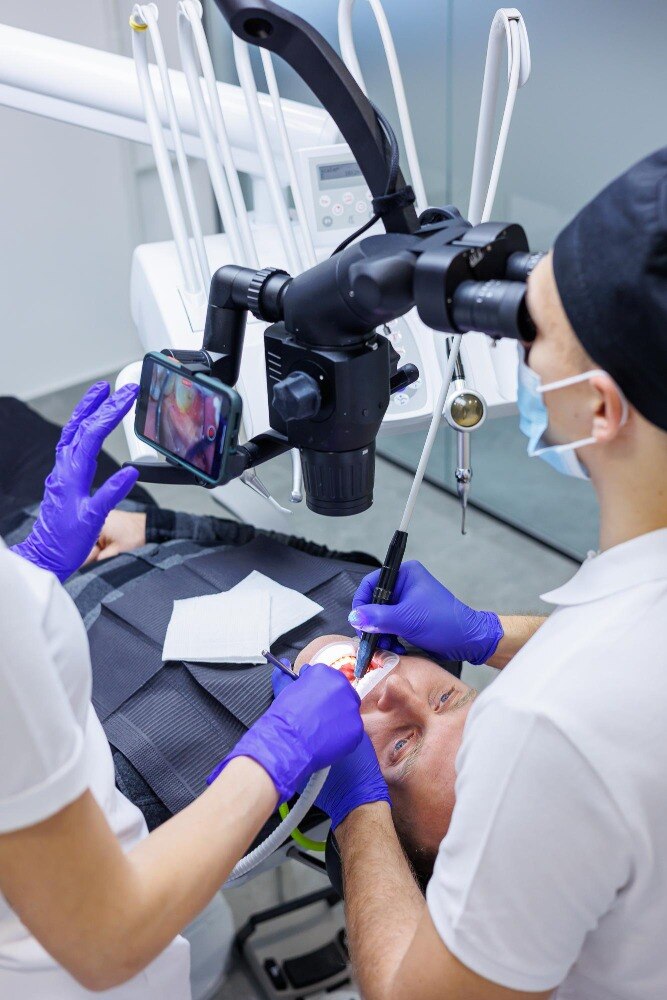
A technology-led dental visit starts with history-taking and a physical examination, not with a machine or a procedure. You will learn how scans and images influence diagnosis, what they cannot show, which questions protect you from unnecessary testing, and what to expect before, during, and after treatment.
Key takeaways
- Bring medication details, allergies, previous X-rays, and pregnancy information to your first visit.
- Choose X-rays or 3D scans based on the treatment question, not clinic technology alone.
- Ask how digital scans will change your filling, crown, implant, or bite-treatment plan.
- Compare maintenance instructions, follow-up timing, scan review, and total visits between clinics.
Your first visit: history, examination, and digital data capture
Your first visit in technology driven dental treatment in Mumbai starts with your history, not a scan. You provide medication details, allergies, previous X-rays, pregnancy information, jaw pain, gag reflex, claustrophobia, and treatment priorities.
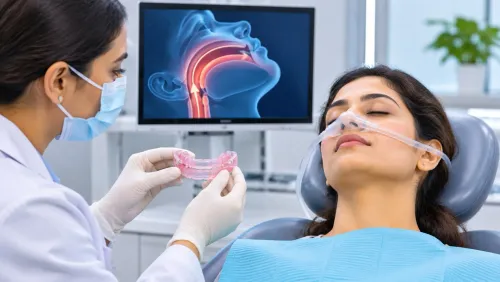
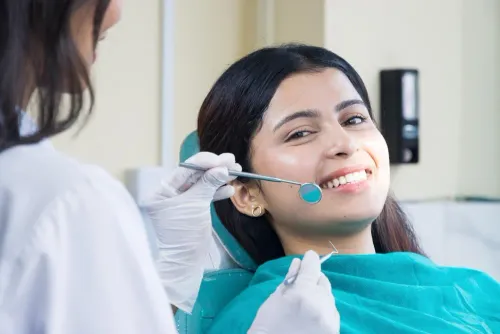
1. The dentist examines your teeth and gums, measures periodontal pockets, checks your bite and jaw movement, tests pulp response, and reviews existing fillings, crowns, and other restorations. Airway or sleep symptoms, including snoring and witnessed breathing pauses, are discussed when relevant.
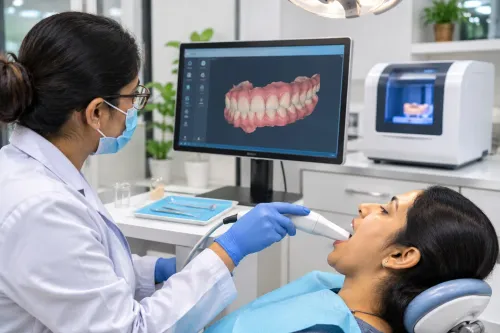
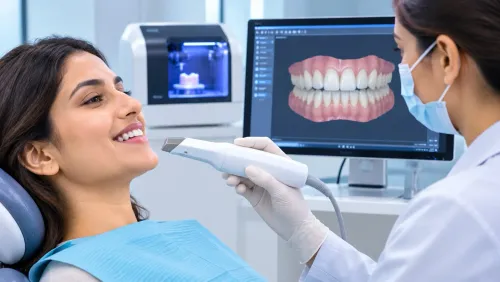
2. An intraoral scanner passes a wand over your teeth to create a radiation-free 3D surface model. It feels like a small camera moving through your mouth and often takes several minutes. Unlike alginate impressions, it avoids the taste and setting time; the model appears immediately and one area can be rescanned.
3. Accuracy can fall with saliva, blood, reflective metal, deep gum margins, restricted mouth opening, or movement. The dentist may need retraction, bleeding control, a repeat scan, or alginate instead.
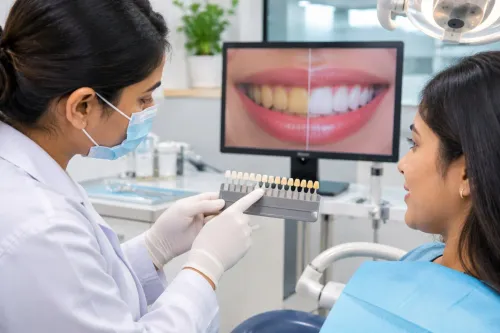
4. Digital photographs record your teeth, gums, facial proportions, and shade, creating a baseline for comparison over time. A scan cannot replace your medical history, periodontal probing, pulp testing, or the dentist’s interpretation. Together, these records support a diagnosis rather than deciding treatment automatically.
Which X-ray or scan you need, and why
The right image depends on the diagnosis being investigated, not on how advanced the clinic’s equipment appears. In digital dentistry in Mumbai, the dentist should choose the smallest examination that answers the clinical question.
| Option | What it shows | Main trade-off |
|---|---|---|
| Periapical X-ray | One or a few teeth, roots, bone levels, and root-canal areas | High detail for a small area; it does not survey the whole jaw |
| Panoramic X-ray | Both jaws, teeth, wisdom teeth, and broad bone structures | Wide overview; less fine detail and more distortion than a small dental X-ray |
| Cone-beam computed tomography (CBCT) | A three-dimensional volume for implant-site bone, impacted teeth, complex root anatomy, fractures, or selected airway assessment | More information and ionising radiation; field of view and exposure settings affect dose |
Advanced dental technology in Mumbai does not make CBCT suitable for every patient. Prescribe it only when its added information can change diagnosis or treatment planning. The dentist must review the entire captured volume, not just the proposed implant site.
Ask these questions before imaging:
- Which diagnosis does this image support?
- Is a lower-dose X-ray or an existing image sufficient?
- Who will interpret the complete image?
- Will the result change my treatment?
For preparation, remove lipstick or facial makeup if photographs are being taken, and remain still during exposure. Ask the clinic about protective measures and its pregnancy-specific radiation protocol; tell the dentist about pregnancy before imaging.
How scans become a plan for fillings, crowns, implants, and bite care
The plan begins when the dentist combines examination findings, photographs, radiographs, scans, bite records, and your goals. This evidence can reveal decay, cracks, gum disease, force patterns, missing teeth, airway concerns, and implant-site limitations.
In digital dentistry in Mumbai, CAD software can design a crown, bridge, denture, aligner, surgical guide, or provisional restoration; CAM equipment or a dental laboratory then manufactures it.
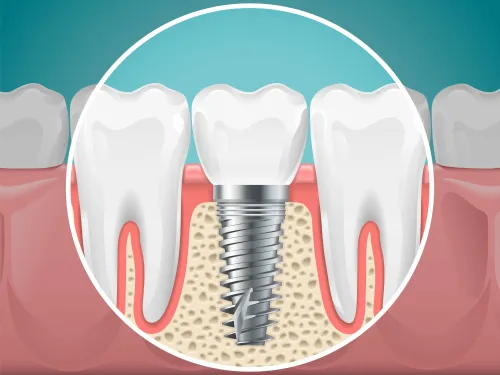
For implants, the dentist can merge CBCT data with an intraoral scan to map bone, nerves, sinuses, and the planned tooth position. Software can produce a surgical guide, but registration error, guide movement, drilling tolerance, and surgical execution still affect accuracy.
Occlusal analysis measures tooth contacts and loading; it does not replace examination, periodontal probing, or diagnosis.
The same data changes decisions across treatment:
- Selective fillings remove only diseased tooth structure when the remaining tooth is strong enough.
- Crown preparation uses the proposed shape to control reduction, contacts, margins, and bite.
- Aligner staging sequences planned tooth movements and exposes spaces that need attachments or reshaping.
- Root-canal access planning helps locate canals while preserving sound tooth structure.
- Gum procedures use measurements and images to plan tissue reshaping or access.
- Smile simulations preview proportions, not guaranteed results; shade depends on lighting, dehydration, ceramic or composite properties, and laboratory characterisation.
- Airway screening identifies sleep-apnoea risk, but diagnosis requires medical assessment and objective sleep testing.
What minimally invasive treatment changes—and what it cannot change
Minimally invasive dental treatment in Mumbai preserves sound enamel and dentine when the diagnosis permits. It may involve caries-risk control, selective caries removal, adhesive restorations, magnification, smaller access points, or flap-minimising surgery. It does not mean painless, risk-free, or drill-free care.
A small-looking cavity can still need pulp treatment or a crown if the tooth is structurally weak or the pulp is irreversibly inflamed.
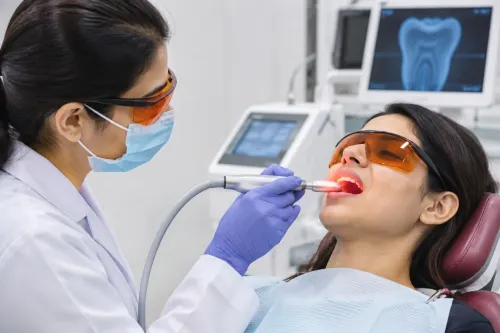
Laser equipment is an adjunct for selected soft-tissue and periodontal procedures. Safe use requires wavelength-specific controls, protective eyewear, cooling where required, and trained operation. A laser does not universally replace a handpiece, scalpel, ultrasonic scaler, or anaesthetic.
Technology also has practical limits: equipment costs may affect fees, software or hardware can fail, and inexperienced use can create errors. Saliva, blood, movement, reflective metal, or a deep margin can make a scan unreliable.
Before treatment, ask to receive:
- A scan preview, photographs, and the radiographs used for diagnosis
- The proposed treatment, reasonable alternatives, and the reason for choosing one
- A written estimate and signed consent form
- A clear fallback plan if the digital fit is poor, including retraction, haemostasis, a repeat scan, a conventional impression, or more imaging
A digital workflow improves information; it cannot override biology, diagnosis, or healing.
From delivery to maintenance: comparing clinics and planning your visits
Judge technology driven dental treatment in Mumbai by outcomes, not by the number of scanners or milling machines displayed.
| Workflow | Possible advantage | What still determines the result |
|---|---|---|
| Digital | Less impression discomfort, faster laboratory communication, fewer remakes | Scan quality, design, fit checks, laboratory production and adjustments |
| Conventional | Useful when saliva, bleeding, limited opening or deep margins compromise scanning | Impression accuracy, transport time, stone model quality and laboratory skill |
| Hybrid | Combines scanning, radiographs and conventional records when needed | Extra appointments or records may still be necessary |
A filling may finish in fewer visits, but appointment numbers still depend on the treatment, healing, laboratory production, try-ins and adjustments. At delivery, the dentist must check fit, contacts, margins, occlusion, shade and tissue response. Digital planning does not remove extraction, grafting, local anaesthetic, osseointegration, wound healing or retainer use.
Implants and complex rehabilitation need staged reviews. Maintenance must address recurrent decay, fracture, wear, gum or peri-implant disease, poor hygiene and parafunction.
Compare clinics using this checklist:
- Verify clinician qualifications, radiation safety, sterilisation, equipment maintenance and laboratory standards.
- Request a written plan, costs, alternatives, emergency access, urgent review and follow-up arrangements.
- Ask whether scans and procedures occur at one location, how facial scans and radiographs are protected, and whether referral arrangements exist.
- Check parking and appointment timing before committing.
IRIDIA DENTAL is one Mumbai clinic you can evaluate with these questions rather than by its equipment list alone. Advanced dental technology in Mumbai is valuable when it improves the complete care pathway.
Related services
Technology-Driven Services We integrate digital innovation at every step—from diagnosis to treatment—to make your dental visits smoother, faster, and more precise. View service → |
Specialised Treatments Our team handles everything from bite imbalances and TMJ disorders to full-mouth makeovers and anxiety-free dentistry—all with precision and... View service → |
Frequently asked questions
What happens during the first technology-driven dental visit in Mumbai?
You discuss medical and dental history, medications, allergies, previous X-rays, pregnancy information, jaw pain, gag reflex, claustrophobia, and treatment priorities before examination and digital data capture.
Which dental X-ray or scan do you need?
The required image depends on the clinical question. A focused intraoral X-ray suits a single tooth, while panoramic imaging surveys both jaws and 3D cone-beam CT supports complex implant, surgical, or airway assessments.
How do digital scans guide dental treatment?
The dentist combines examination findings, photographs, X-rays, scans, and bite records to plan fillings, crowns, implants, or bite care and explain the sequence of visits.
What does minimally invasive dental treatment change?
It aims to preserve healthy tooth structure, reduce unnecessary tissue removal, and support precise treatment. It cannot reverse extensive decay, replace missing bone, or eliminate the need for maintenance.
How should you compare dental clinics before treatment?
Compare the reason for each scan, who reviews the data, the proposed treatment sequence, maintenance instructions, follow-up schedule, and the total number of visits.
Related services
Restorative & Biomimetic Dentistry Restorative & Biomimetic Dentistry Our restorative care philosophy goes beyond simply fixing teeth—we aim to restore them to their natural strength, form, and function using minimally... View service → |
Preventive Treatments Comprehensive Oral Examination A complete oral health check is the cornerstone of effective dental care. View service → |
Implant Dentistry With Masters in Implantology from the European Association of Osseointegration, we bring you expertise from inventors and pioneers, along with the... View service → |
Smile Design & Facial-Driven Dentistry Smile Design & Facial-Driven Dentistry At Iridia Dental, our cosmetic dentistry services combine advanced technology with artistic precision to create smiles that are not only beautiful... View service → |
Keywords