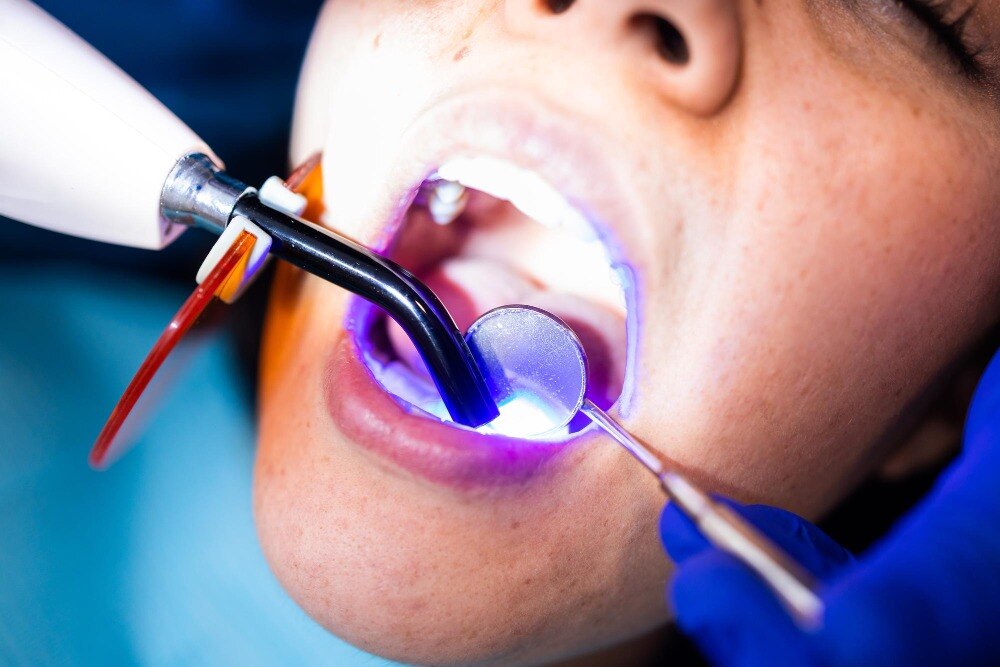
The phrase can describe several different treatments, from periodontal pocket decontamination and gum surgery to photobiomodulation, implant-site care, and biologic regeneration. By separating the laser procedure, the biologic material, and the conventional treatment around them, you can identify what a proposed plan actually includes and whether it fits your diagnosis.
Key takeaways
- Confirm whether the plan treats gums, soft tissue, bone, or pain separately.
- Ask which laser wavelength and device will be used for your procedure.
- Request the name, source, and purpose of every biologic material proposed.
- Compare diagnosis, follow-up visits, risks, and total fees—not laser branding alone.
What treatments are included under laser regenerative dentistry?
The phrase laser regenerative dentistry in Mumbai is a marketing description, not a formally defined dental specialty. It can combine laser-assisted gum treatment, soft-tissue surgery, photobiomodulation, and selected regenerative procedures.
Practical treatment categories include:
- Periodontal pocket treatment and gum decontamination for gingivitis, periodontitis, and selected bacterial inflammation.
- Soft-tissue procedures, including gingival contouring and frenectomy for restrictive frenulums.
- Wound care and photobiomodulation after selected surgical procedures, to support pain control or healing.
- Oral-lesion management for appropriate soft-tissue lesions after diagnosis.
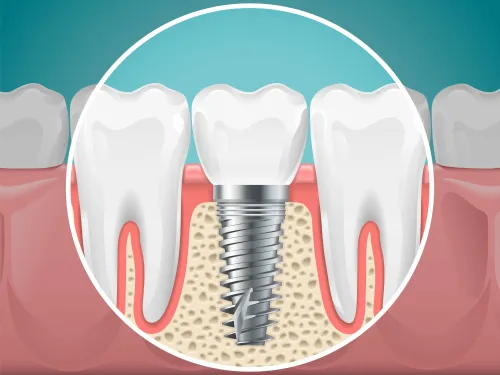
- Implant-site soft-tissue treatment and peri-implant care for inflammation around implants.
- Selected periodontal regeneration using grafts, membranes, platelet concentrates, or other materials.
- Selected endodontic regenerative procedures, where canal disinfection is combined with a biologic scaffold or induced bleeding.
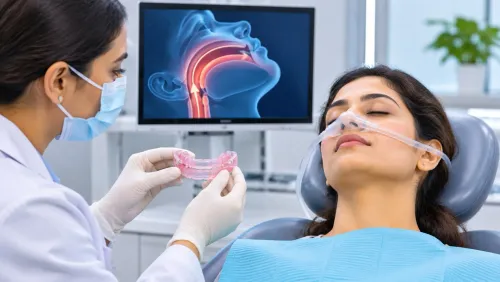
Airway and sleep procedures do not automatically belong in this category. Obstructive sleep apnoea requires appropriate medical or sleep evaluation; a laser soft-palate procedure is not equivalent to established treatment without objective outcome testing.
Your treatment plan should name the diagnosis, intended tissue effect, laser wavelength, and regenerative procedure or material. Ask whether the laser is an adjunct to scaling, surgery, grafting, or implant treatment, because laser use alone does not rebuild lost bone, gum, or periodontal attachment.
How do laser wavelengths and laser types change the treatment?
In laser dentistry in Mumbai, the wavelength determines which tissue absorbs energy, how deep it reaches, and how much heat surrounds the target. A diode laser is not interchangeable with an erbium:YAG, Nd:YAG, or CO2 laser.
| Laser type | Main tissue target | Precision and heat | Key limitation |
|---|---|---|---|
| Diode, 810–980 nm | Pigmented soft tissue, gingiva, periodontal and peri-implant soft tissue | Fibre delivery is precise; heat rises with prolonged or stationary firing | Not a substitute for removing substantial enamel, dentin, old fillings, or tooth structure |
| Erbium:YAG | Water-rich enamel, dentin, bone, and soft tissue | Precise ablation with water cooling and comparatively limited thermal spread | Hard-tissue access, cooling, and operator technique remain important |
| Nd:YAG | Deeper, pigmented soft tissue and selected periodontal targets | Greater penetration and heat than erbium; useful for coagulation | Excess energy can injure periodontal or implant-supporting tissues |
| CO2 | Superficial soft tissue | Strong surface absorption provides cutting and haemostasis but creates thermal risk | Limited depth control and unsuitable for substantial hard-tissue removal |
Diode laser dental treatment in Mumbai generally means near-infrared soft-tissue treatment around 810–980 nm for gingival contouring, frenectomy, sulcular decontamination, haemostasis, and selected periodontal or peri-implant procedures. Choose the wavelength for tissue absorption, pigmentation, bleeding control, pain or healing goals, and required depth—not a promise that one setting suits every procedure.
Ablation removes or alters tissue. Low-power photobiomodulation aims to influence pain, inflammation, or healing; its dose, energy density, power, exposure time, and tissue target must be stated. More laser is not automatically better.
Which biologic materials can be part of regenerative dental treatment?
A laser is an instrument, not a graft or scaffold. In regenerative dental treatment in Mumbai, it may assist decontamination, soft-tissue management, or healing, while a separate biologic material supports new tissue formation. Laser regenerative dentistry in Mumbai does not mean every clinic offers every option below.
| Option | Purpose |
|---|---|
| Platelet-rich fibrin | Concentrated fibrin matrix and platelets placed in selected defects |
| Platelet-rich plasma | Platelet concentrate used with a graft or surgical procedure |
| Bone graft material | Fills or supports a bone defect using autogenous, donor, animal-derived, or synthetic material |
| Guided tissue regeneration membrane | Excludes fast-growing gum tissue so bone and attachment cells can repopulate the defect |
| Enamel matrix derivative | Protein preparation used in selected periodontal attachment defects |
| Growth-factor product | Delivers signalling proteins to support bone or periodontal repair |
| Other scaffolds | Provides a three-dimensional framework for cells and blood supply |
These are different treatments, not interchangeable ingredients. The choice depends on defect anatomy, inflammation control, oral hygiene, smoking status, tooth stability, and wound closure. Narrow, deep intrabony defects are generally more favourable than broad or shallow defects.
Regenerative endodontics follows a separate pathway for selected immature or damaged teeth. It involves canal disinfection, induced bleeding or placement of a biologic scaffold, and a well-sealed restoration.
A laser alone cannot rebuild lost bone, gum recession, or periodontal attachment. Grafting, periodontal surgery, extraction, or sustained plaque control may be necessary. Laser use is often an adjunct to scaling and root planing, antibiotics, grafting, periodontal surgery, or implant treatment.
What happens during a laser regenerative appointment?
A laser dentistry in Mumbai appointment should produce a diagnosis-specific plan, not a generic “regeneration” package.
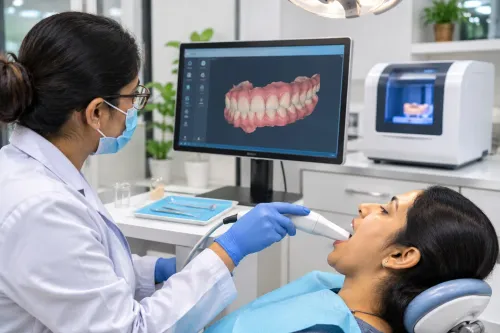
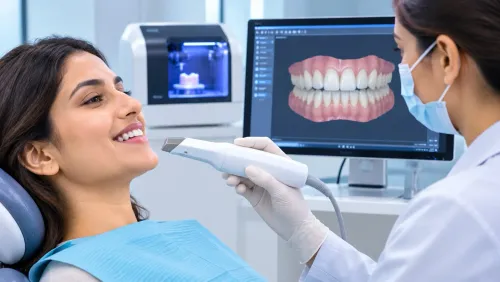
1. The clinician records your medical history, examines the teeth and gums, completes periodontal charting, and takes photographs. Radiographs or 3D imaging are added when bone, roots, implants, or surgical anatomy require assessment.
2. You discuss conventional alternatives, including mechanical scaling and root planing, caries removal, periodontal or implant surgery, implant-surface management, and restoration. Laser treatment may support these procedures rather than replace them.
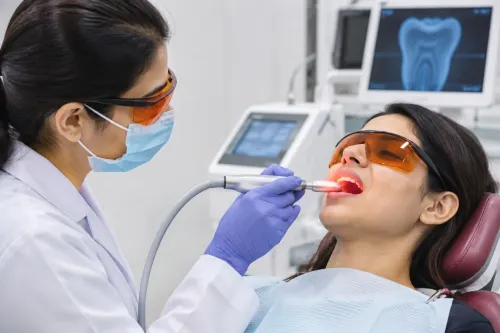
3. Local anaesthesia is used when inflammation, depth, caries, implant treatment, or surgery makes treatment uncomfortable. The team then isolates the area and provides wavelength-specific protective eyewear for you and staff.
4. The operator selects wavelength, power, pulse, exposure time, and cooling for the target tissue. Reflective surfaces are controlled, plume is evacuated or ventilated, and the beam is not fired while stationary. Incorrect settings or poor cooling can cause burns, necrosis, unintended recession, or adjacent-tissue injury.
5. The laser is applied to the planned site. If indicated, the clinician places a bone graft, membrane, platelet concentrate, scaffold, or other biologic material, then uses a dressing or sutures for closure.
6. Follow-up checks healing, probing measurements, photographs, radiographs, and symptoms. Sensitivity, swelling, bleeding, delayed healing, or pain can occur.
For children, diagnosis, cooperation, isolation, evacuation, eye protection, and behaviour management determine suitability. Conventional restorative or surgical options remain available when laser treatment is unsuitable.
How can you compare laser clinics and proposed treatment plans in Mumbai?
A credible plan for laser regenerative dentistry in Mumbai names a diagnosis, not a package. Ask for a written protocol that answers:
- What exact diagnosis is being treated, and is the laser an adjunct or the main treatment?
- Which wavelength, power, exposure time, and dose are planned?
- Is the goal ablation, bacterial reduction, haemostasis, or photobiomodulation?
- Is a graft, membrane, platelet product, enamel matrix derivative, growth factor, or scaffold included?
- Which conventional alternative has been considered, such as scaling and root planing, surgery, or extraction?
- For an implant, how will plaque control, implant-surface access, prosthetic design, and peri-implant risk factors be managed?
- How will success be measured: periodontal probing, photographs, radiographs, tooth vitality, wound review, or sleep testing?
| Plan detail | Defined protocol | Warning sign |
|---|---|---|
| Laser role | Adjunct or primary treatment stated | “Laser regeneration” without a treatment step |
| Biologic component | Named graft, membrane, platelet product, or scaffold | “Regeneration” with no material specified |
| Outcome | Baseline and follow-up measures recorded | Improvement promised without a measurement |
Regenerative dental treatment in Mumbai can mean several different biological procedures; diode laser dental treatment in Mumbai is not automatically regenerative. A multidisciplinary clinic such as IRIDIA DENTAL helps when periodontal, implant, restorative, paediatric, or sleep assessment must be coordinated. The value lies in diagnosis-specific settings and follow-up, not the word “laser” alone.
Related service
Laser & Regenerative Dentistry Laser & Regenerative Dentistry Our four-wavelength Diode Laser and biologic therapies allow for minimally invasive, accelerated healing with less discomfort. View service → |
Frequently asked questions
What treatments are included under laser regenerative dentistry?
The term can include laser-assisted gum treatment, soft-tissue surgery, photobiomodulation, and selected regenerative procedures. Ask which specific procedure your diagnosis requires.
How do laser wavelengths and laser types change the treatment?
Different lasers interact with gum tissue, tooth structure, blood, and water in different ways. Ask for the device name, wavelength, target tissue, and intended outcome.
Which biologic materials can be part of regenerative dental treatment?
A plan may use materials such as bone graft particles, collagen membranes, platelet concentrates, or enamel matrix proteins. Confirm each material’s purpose and whether it is needed for your defect.
What happens during a laser regenerative appointment?
The appointment usually includes examination, imaging or measurements, local anaesthesia when needed, laser treatment, placement of regenerative material when indicated, and instructions for cleaning and follow-up.
How can you compare laser clinics and proposed treatment plans in Mumbai?
Compare the diagnosis, treatment goal, laser wavelength, biologic materials, clinician’s experience, risks, follow-up schedule, and complete fee rather than relying on the phrase laser regenerative dentistry.
Keywords